Monday, June 30, 2014

Friday, June 20, 2014
China Is NearThe game-changing power of the Chinese box office
By Michael Berry
On September 22, 2013, the Dalian Wanda Group announced that it was embarking on a multibillion-dollar enterprise to build what is expected to be the largest film studio in the world. With cost estimates ranging from $4.9 billion to $8.17 billion and a scheduled completion date of 2017, the Wanda Qingdao Oriental Movie Metropolis project was unveiled in Shandong at a star-studded event featuring Hollywood studio heavyweights like Harvey Weinstein, A-list celebrities including Leonardo DiCaprio and Nicole Kidman, and a veritable who’s who from the Chinese film industry. The announcement comes on the heels of other bold Wanda moves, such as its 2012 purchase of the AMC Theatres chain and a 2013 donation of $20 million to the Academy of Motion Pictures’ new film museum, all of which bespeak Dalian Wanda and its chairman Wang Jianlin’s increasingly large footprint in Hollywood. But the Wanda factor is but one aspect of the increasingly complex transnational courtship that has been taking place between Hollywood and the Chinese film industry over the past decade.

House of Flying Daggers
The new millennium began with a new model for the transnational Chinese blockbuster in the form of Ang Lee’s Crouching Tiger, Hidden Dragon, which remains the single highest-grossing foreign-language film in U.S. box-office history. It was followed by a series of high-budget martial-arts spectacles that tried to cash in on the success of Lee’s juggernaut. One after another, films like Hero, House of Flying Daggers, Curse of the Golden Flower, The Promise, Curse of the Black Scorpion, and others tried to emulate and tweak the Crouching Tiger formula: pan-Asian superstar casts, cutting-edge martial arts choreography harnessing state-of-the- art CGI, epic story arcs set in a fantasy version of ancient China, and complex international financing and distribution deals. Though they sought to break U.S. and international box-office records, for the most part these films met with success only in the Chinese market. After more recent forays with a new breed of Chinese blockbuster predicated on kung-fu stories of the late imperial and Republican era (best represented by films like Bodyguards and Assassins and the Yip Man series), by decade’s end Chinese studios had modified their blockbuster formula yet again. The new model seems to favor the modern historical epic and bold pairings of leading Chinese actors with Hollywood A-listers. The Dark Knight’s Christian Bale removed his cowl and took up the collar to play a priest in The Flowers of War, Zhang Yimou’s epic portrayal of the Nanjing Massacre; Adrian Brody and Tim Robbins signed on to Feng Xiaogang’s wrenching cinematic exposé of mass famine, Back to 1942. Similar tactics were adopted by lower-budget collaborations like Dayyan Eng’s Inseparable, which paired Chinese stars Daniel Wu and Gong Beibei with Kevin Spacey. As Chinese studios started experimenting with these new transnational pairings, Hollywood recognized the increasing importance of the Chinese market by way of its miraculously expanding box-office figures. According to Variety, “From 2007-12, China’s box office has improved at a compound annual growth rate of 47%, to $2.7 billion.” Tinseltown began to aggressively court Chinese stars to appear in some of its most lucrative franchises. The growing list of action and comic-book franchises in which Chinese talent has appeared includesResident Evil: Retribution (Li Bingbing), The Expendables 2 (Yu Nan), Iron Man 3 (Wang Xueqi, Fan Bingbing), and two forthcoming blockbusters, X-Men: Days of Future Past (Fan Bingbing) and Transformers: Age of Extinction (Han Geng, Li Bingbing). Running parallel to these onscreen alliances are the even higher-stakes ones behind the scenes between the Hollywood studios and their Chinese counterparts. Since 2011 there have been partnerships between production companies like Relativity Media and Huaxia Film Distribution, as well as the formation of a new series of Hollywood studio ventures in China, such as Oriental DreamWorks. And while these new collaborations have yet to bear fruit, the emergence of more dynamic coproduction attempts is already apparent:Skiptrace, starring Jackie Chan, Fan Bingbing, and Seann William Scott, takes clear aim at global markets with English-language dialogue and Chan’s signature action-comedy formula.

Finding Mr. Right
But even as Hollywood takes these and other increasingly bold steps to capture a larger piece of the expanding Chinese market, preliminary figures released in October 2013 suggest that while overall Chinese box-office receipts continue to expand with record growth, Hollywood’s take is down, even though the quota for foreign films was increased. While a complex set of factors explain this unexpected shift—from Chinese control and manipulation of screening times and release dates to film piracy—one of the biggest threats for Hollywood is the Chinese film industry’s adoption of Hollywood forms, genres, styles, and even settings. Among the big winners at the Chinese box office in 2013 were a series of comedies and dramas that liberally borrow from Hollywood models to produce Mandarin-language films that are more accessible to local audiences. These include the action comedy My Lucky Star, for which producer/star Ziyi Zhang recruited American TV director Dennie Gordon. Veteran Hong Kong filmmaker Peter Chan’s American Dreams in China not only borrowed heavily from The Social Network for its plot and structure—three entrepreneurial-minded college friends start what becomes a multimillion- dollar enterprise, tearing their friendship apart in the process, with story developments framed by a litigation hearing— but also featured major scenes shot in New York and highlighted a fascination with all things American, with the mastering of English as a key plot line. And then there is Xue Xiaolu’s Finding Mr. Right, a romantic comedy that was not only aggressively marketed as “The Chinese Sleepless in Seattle” and drew heavily on Hollywood rom-com conventions, but was actually filmed in Seattle. Collectively, these and other like-minded Chinese films are hijacking popular Hollywood formulas, stories, and even settings to such a degree that domestic audiences now have homegrown alternatives to give them their Hollywood fix. Big-budget action spectacles like Avatarand Pacific Rim tend to do business in China, while romantic comedies and smaller scale films struggle to find a footing. The axiom that comedy doesn’t travel well across cultural borders holds true in China as elsewhere. The aforementioned trio of romances and comedies—along with other recent local hits like Tiny Times and Lost in Thailand—demonstrates that American romance and comedy formulas are much more appealing to Chinese audiences when they have been internalized and reconfigured for homegrown tastes. Even those “foreign elements” that have attracted audiences to Hollywood fare can now be provided through the casting of foreign actors and the exploitation of foreign locales in Chinese productions. Furthermore, what does not bode well for Hollywood is the simple fact that these domestic romantic comedies (even those shot partially overseas) are produced for just a fraction of what the American studios spend on the kind of action fare that brings out the Chinese public. So while both genres have been performing well at the Chinese box office, the recent wave of romantic dramas and comedies has a clear advantage over their budget-bloated Hollywood competitors when it comes to profit margins. (For example, Finding Mr. Right grossed $83 million in China with a budget of only $5 million, whereas Pacific Rim grossed over $111 million there with a hefty $190 million budget.)

Iron Man 3
It remains to be seen just how much of an impact Wanda’s new super-studio will have on the situation, but even the most conservative industry observers see big changes afoot. According to early media statements made by Wanda, approximately 70 percent of their new studio facilities will be reserved for local productions. Of course, as more “foreign films” are shot in China with Chinese studio facilities, the definitions of “Chinese film” or “foreign film” may start to break down. At the same time, the Chinese-Hollywood co-production, a term that describes titles ranging from The Forbidden Kingdom to Iron Man 3, has been gaining traction thanks in part to their exemption from China’s strict quota system regarding international releases. While it’s likely that the Wanda Qingdao Oriental Movie Metropolis will increase the number of such collaborative ventures, the rules of the game will undoubtedly change if Wang Jianlin gets his way. In a recent television interview Wang seemed to take issue with the model adopted by Iron Man 3 (in which Chinese stars Wang Xueqi and Fan Bingbing appeared in a short scene that was omitted from the film’s U.S. theatrical version), expressing dissatisfaction with Hollywood’s sometimes perfunctory approach to co-productions: “Hollywood wants to make money by throwing in a few famous Chinese actors, giving them a couple of scenes and a handful a lines, and then cutting them out for the North American market. But if American film companies approach China like a money tree and do not respect the Chinese market and Chinese consumers, then these types of companies are destined to fail in the Chinese market.” As Wanda’s new enterprise unfolds, while Chinese and U.S. studios vie for one another’s markets, and the two countries’ film industries become increasingly intertwined and mutually dependent, we can expect even more radical changes as both sides navigate the treacherous waters of transnational filmmaking in the 21st century.
Monday, June 16, 2014
在限制中率性而為──專訪邱禮濤

訪問︰陳芊憓、譚以諾
整理︰陳芊憓
整理︰陳芊憓
(獨媒特約報導)邱禮濤導演是香港極為多產的電影人,從攝影指導到導演,他的作品多不勝數,而且作品類型豐富,除了血腥恐怖片以外、還有性工作者系列、黑幫江湖片、驚慄片等等,共超過七十部。正如他所說,因為愛拍電影,所以一年三百六十五日都願待在片場。而他的新戲《重生3D》剛在香港上正場,邱禮濤就已在跟進下部新戲《雛妓》的後期製作,如此酷愛電影的他,對於電影工業總是有自己一套說法。
隨意中的心思
邱禮濤的新作《重生3D》由新加坡、台灣等地出錢資助,而編劇則是位在新加坡長大的香港醫生,他拿著已完成的劇本找上邱導,但我們現時所看到的版本卻是經過導演多翻修改:「電影的框架仍是他的,但有我的參與以外我改了很多東西。這部電影是講述因墮胎而引發的鬼故事,最初的劇本裡墮胎是主要原素,我覺得原來的故事發展有些問題,所以修改了不少。先旨聲明我本人不反對墮胎,而現在關於墮胎的故事仍然存在,只不過墮胎不是主要原素,可以說是模糊化了,變了好像一個平行時空,電影創造了一個鬼世界,不在我們的空間。不過我做事也有一個底線,始終不可令本來的故事完全改變了。」
修改後的劇本讓邱禮濤的風格更加突出,電影中有不少細節像是充滿喻意,如女主角吸食她母親的血時,背景有一幅蘇聯左派的畫;又如故事中不斷強調15年前後的變化,似是在隱喻香港回歸中國多年是一個惡夢;令人想起邱導的另一部作品《頭七》中,林家棟住在的士三十年呼應著改革開放三十年,觀者看來是刻意安排的細節,邱禮濤卻說這是隨意中的刻意:「背景那幅畫不是太刻意的,這是隨意之中的選擇,美術指導給十幅你選,我就選了這一幅,與電影內容其實沒有關係,有些是有意圖的,但這是隨意的,當然,隨意也是一種選擇。」
《重生3D》中的畫雖隨意,但《頭七》的三十年聽他說來似乎另有心思︰「《頭七》中的三十年就是有意思的,用來表現社會的新狀態,任讀者怎樣看,不同的人拍就會有不同聯想,你會這樣解讀,但有些人怎樣也不會聯想得到與改革開放有關,這是我自己的理解。我漸漸相信,你是怎樣的人就會拍怎樣的戲。」他舉例說,有些人刻意想拍社會議題的電影,對他來說,這是本末倒置。「你不應該是刻意去找東西拍,雖然這也是一種方法,但就偏離拍電影的原意了。又如《黑白道》中張家輝做了八年卧底,八年這長度也是隨意的,性格決定命運,在隨意中其實也有原因,為何一個角色叫小明,一定有點原因,可以是絕頂的一般性,或者我小時候有個朋友就叫小明。」
邱導雖然強調隨意,但卻隱約感到他的隨意並非完全隨意。當被問到為何把《頭七》的場境設定在廣州時,他回應說雖然電影中有不少與中國有關的原素,但卻認為電影並不需要因為在中國發生而去說中國,「若是這樣,那不過是篇紀錄式或報告式的文學作品。所以在《頭七》,我刻意迴避有地方性的場景,那輛的士也是超現實的;電影的確可以有很多詮釋的方向,正如共產黨說的中國歷史有他們一套,我們說的又是另一套。就像葉璇這角色,你可以說她代表共產黨的黨史,但不一定要在這方面看,歷史裡的一個人,一塊地磚如果放在博物館,你也可以給他們一個意義。任何故事都可以有很多版本,歷史其實需由你去詮釋。」

《重生3D》劇照
關懷社會政治
正如邱導所說,怎樣的人就拍怎樣的電影,他的臉書中不乏對社會的關懷,中央下達白皮書,他說自己連劇本和論文都放下,就先讀畢全份白皮書,六四時也分享了許多燭光晚會的圖片,亦拍過幾部以社會題材為主的電影,像《等候董建華發落》和《給他們一個機會》等,因此不少電影評論人都嘗試從社會政治角度解讀他的電影。雖然他笑說不是刻意的,但他總是把香港的政治、社會事件放在心上,就以《葉問──終極一戰》為例,他明言是抱著創作香港本土作品的心態拍攝的,正因如此,他刻意選了葉問在港的那段歷史,希望以電影感受父母當時過著的日子:「我籍貫是潮州,我爸爸是潮州人,我是香港人。《葉問-終極一戰》是鄉情電影,是本土卻不是現在的本土,電影是想說香港是如何從戰後走到今天的,但片長有限,不能細說我自己的想法,但大概也是想感受父母那時過著的日子。」而《黑白道》中張家輝的角色更是明顯地象徵著香港:「故事就像是講一個貧窮的家庭被欺負,所以把小孩送給別人,小孩有什麼好東西就拿回來當幫忙,很多年後貧窮家庭想要回自己的兒子,要回了又不信任,大概是這樣,香港就是這樣。」

《葉問-終極一戰》一景
敬重文人與文藝電影
邱禮濤對香港政治社會的關懷,不單表現在電影中,他更在工餘時間修讀文化研究的哲學博士,研究中國對電影的審查制度,來來去去都是與電影相關,足見他對電影情有獨鍾:「修讀博士大部份是為了興趣。我在香港電影界比上不足,比下有餘。我有想過到外國遊學,但香港人這麼善忘,離開兩年後回來已沒人再記得我。七十年代以前的電影前輩大多數是知識份子,現在很多都是紅褲子出身。我覺得吳宇森的戲很膚淺,再過五十年後就沒人會提起,劉偉強、吳宇森、葉偉信、鄭寶瑞等數得出來的同年代的人也不是高學歷的,這也是香港電影界其中一個問題,總是讀書太少。王晶是大學生,反而就做了別的事情,沒學歷的人拍出來的電影就有可能會很膚淺。」
或許是怕電影欠缺內容,邱禮濤也愛閱讀,嘗試從不同的文學作品中取靈感。如《陰陽路之升棺發財》的故事則或多或少受了西西的〈像我這樣的一個女子〉影響:「那是我小時候讀過的小說,拍電影之時我刻意不重看,我不希望改編它,所以我連它的改編電影也沒有看。」一談起西西,他就雀躍起來:「那時西西的讀者比現在多,讀書的時候西西是很有名氣的作家,過去十幾年淡忘了,到了天星和皇后碼頭事件,大家才提起西西,以往西西的作品是每一個人都會讀的,可惜現在只有很喜歡文學的一小撮人才會翻她的書。」
整整一個小時的訪問裡,除了西西,邱導也多次提到七十年代以前的電影圈前輩:「戰後年代大學生很少,那時中國有超過一半人是文盲,能夠讀大學的人非常了不起。不過當時電影工業裡有不少都是大學畢業的,包括幕後的李祖永,導演如卜萬蒼和易文等是知識份子,幕前的盧敦、吳楚帆和白燕等人又是話劇出身,胸懷文藝救國,所以他們無論拍商業片,抑或有話要說的電影也好,都與文藝世界接近。」想不到拍這麼多類型片的邱導,原來這麼喜歡文藝電影和前輩影人。「但現在不同了,現在大多是取巧、急功近利。以前社會對人的評價有很多把尺,現在只得一把尺,賺到大錢的就叫成功,其實成功並不單是從錢來衡量的。」

《陰陽路之升棺發財》一幕
與客觀環境周旋
邱禮濤在電影圈打滾多年,拍過許多港人熟悉的鬼片,《陰陽路》系列更是燴炙人口。近年來已少拍鬼片的邱導,新作竟又回歸鬼片之途,而且攝影技巧一如既往的充滿藝術美感,戲中不少鏡頭是從屋外的窗拍進屋內,形成畫中又有畫:「有這種構圖主要是因為電影中的房子不大,以一般視覺電影來說,跳出景外拍攝感覺令空間大一點。鬼片大多是這樣,以客觀鏡頭拍攝,像有人看著你,以營造氣氛。」常言道導演的拍攝風格是從資源限制中琢磨出來的,而邱導總能以有限的資源拍出他的特色。
不單在《重生》能看出他的拍攝風格,甚至他當攝影指導電影中也可以到邱禮濤對於畫面的掌握總是帶點偏鋒。如在《奪帥》中,黑幫互相撕殺的場面中運用了許多近鏡和高空全景鏡頭,突破觀眾對黑幫類型片畫面的期待。而《洪興仔之江湖大風暴》的敘事方式也與其他古惑仔系列電影有別,「那時我正在拍《伊波拉病毒》,監制王晶和編劇來找我,看完劇本後我覺得它不應是當下的故事,所以我便想怎樣把武俠片的劇情放在時裝電影裡。如戲有病,我就用我的方法去醫,我沒有再問王晶,可能他也不想拍成這樣。如果劉偉強的《古惑仔》是寫實的,我的《洪興仔之江湖大風暴》便是不寫實的,那我就嘗試把古代的武俠放在現代裡頭拍。」
如此數來,他的電影作品中有許多都沒法在大陸上映,黑幫片固然不行,鬼片更加不能通過審查。若要讓電影取得放映權則須重新剪接,又需要改對白、以夢一場來包裝。但邱禮濤卻絲毫不介懷,更認為大陸的這種審查制度是基於政權的單薄:「如果在大陸上映的話,老闆可以賺錢我又不介意他們會剪成怎樣,其實內地人要看原來的版本,可以有十萬種方法,某程度上內地是很自由的,什麼片種都有。電影審查署的旁邊就可以買到盜版,要看電影原版的話,他們自有方法。如果他們(內地政權)行得正企得正,不會怕你說,他們就是怕你說,這反映了中國政權有問題。這是很弱的政權,表面上有錢而已。作為導演,我們只能盡力而為地應對審查,例如一部卧底片,我會跟他們說不是卧底片,我是拍徐石麟,將角度改變,給電影另一個說法,試試能不能。」不過邱導也說,並不是時常有機會向審查人員解釋,始終人家是主動,自己是被動的。「有時有機會講,有時沒有,那就唯有試試跟著他們的制度而改拍。他們給你的建議,其實是命令。」

《洪興仔之江湖大風暴》與武俠
鍾情電影的人生
接受訪問時,邱導的語速很快,說話很自信,對於拍電影有一套完整的想法,認為電影人總不能為大陸市場而選擇拍或不拍,也沒有商業電影或藝術電影之分:「商業是一個後知後覺的定義,可能你想拍商業片但最後是藝術片的票房,有人想拍藝術片最後是商業片的票房,《一代宗師》的票房證明它是『商業片』,《Delete愛人》的票房是『藝術片』的。拍了一部電影當然希望多點觀眾看,是否商業片不是重點,商業的意思是多人看多人討論,可能你機關算盡到最後都會淚流滿面,很難預料,不是你想做商業片就能做到。而且電影市場裡也不可以只有一類片種,如果現在只得文藝片也是不健康的,各式各樣的片種也應該要有,好看就看。」
對話中也深深感受到他對電影製作的熱情,即便是日常生活中也不斷讓自己想有什麼東西可以拍。從他的作品列表中也可得知他不是揀擇的人,只要有機會讓他拿起攝影機或是導演筒,便會盡量把握,在劇本中找出可以發揮的地方。被問到他最喜歡的導演時,邱禮濤毫不遲疑地答法斯賓達(Rainer Werner Fassbender):「因為他愛電影。王家衛一定不是愛電影的,至少不是愛『拍』電影的。愛電影又怎會幾年才拍一部戲呢?你喜歡一個女子你也會想每晚抱著她,不可能三年才抱一次吧?但法斯賓達卻很愛電影,三十多歲拍四十多套電影,有沒有錢都要拍,總之有器材他就拍,但他的電影真的是很好看,我個人比較喜歡raw的風格。」而邱導的多產就好比法斯賓達,問他為何不停下,他回答說:「在電影行業裡,我相信我比很多人更愛電影。譚家明18年才拍一部,或許他是愛電影,不是愛『拍』電影。王家衛也不是愛拍電影,他可能是愛電影的,但是是另一種愛。」
如此愛電影的邱禮濤作品總是一部接一部,《重生3D》剛上映,與性工作者相關的新作《雛妓》就馬上完成後製。套用邱禮濤的話,只有愛電影的才會把生命所有的時間投入電影中。
本文亦刊於映畫手民
Saturday, June 14, 2014
Saturday, May 31, 2014
The 15 Best Noir Films Of The 1950s
30 May 2014 Features, Film Lists by James Davidson

Film noir, which had begun in the 1940’s, continued into the 1950’s, although there were obvious changes to the style. Gone were the hard boiled detective stories of Phillip Marlowe and Sam Spade, replaced by more unpredictable, violent figures like Mickey Spillane’s Mike Hammer and stories that emphasized psychological character studies.
The stories become more widely varied in terms of theme and location, reflecting looser codes and conventions and resulting in films as wide ranging as In a Lonely Place and The Night of the Hunter. Film noir of the 1950’s saw established directors like John Huston continue on, but also saw the entrance of new directors like Robert Aldrich and Stanley Kubrick. Here then are the 15 essential film noir of the 1950’s.
15. Angel Face (1952)

Directed by Otto Preminger, Angel Face stars noir veteran Robert Mitchum as Frank Jessup, an ambulance driver who becomes infatuated with Diane Tremayne (a young Jean Simmons) after Jessup is called to the Tremayne home. He eventually becomes the wealthy family’s chauffeur and risks his own relationship with girlfriend Mary by his flirtations with Diane. Diane is actually plotting the murder of her stepmother and father and draws Frank in on the plot with her.
Released by RKO with a great cast including Herbrt Marshall and Leon Ames, and music by Dimitri Tiomkin, Angel Face was once a somewhat forgotten film noir but has recently seen its reputation grow. Preminger, who directed the classic Laura and later in the decade will have a big hit with Anatomy of a Murder, avoids the melodramatic cliches in Angel Face by creating a haunting portrait of love, greed and obsession.
14. While the City Sleeps (1956)
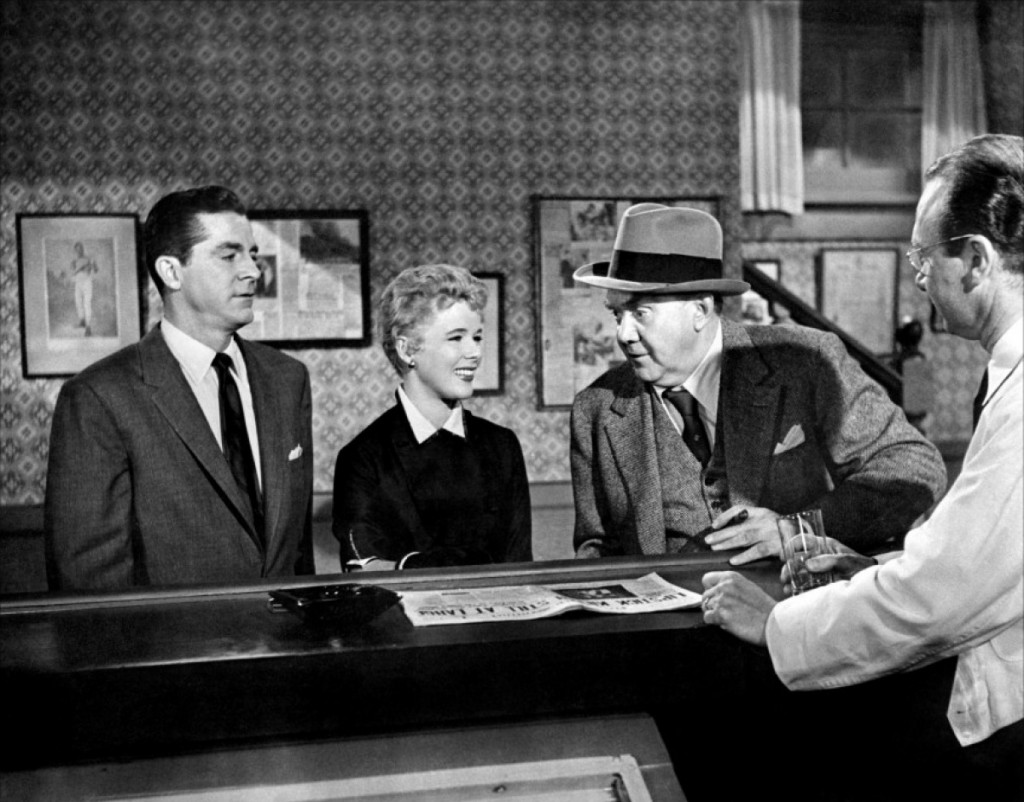
A serial killer dubbed “the Lipstick Killer” is on the loose in New York attacking women, and when media mogul Amos Kyne dies, his son Walter (Vincent Price) initiates a battle between the various department heads to see who can solve the mystery and break the story first. In the midst of it all is reporter Walter Mobley, played by noir veteran Dana Andrews, who allies himself with newspaper man John Day Griffith (Thomas Mitchell) against wire-service chief Mark Loving (played by always despicable George Sanders). Mobley struggles to catch the killer while dealing with his own personal problems and the tumult at work.
A late entry from director Fritz Lang, While the City Sleeps was interesting for its depiction of the behind the scenes goings on of the media world in an era when newspapers and print reporting was still tops.
13. Pickup on South Street (1953)
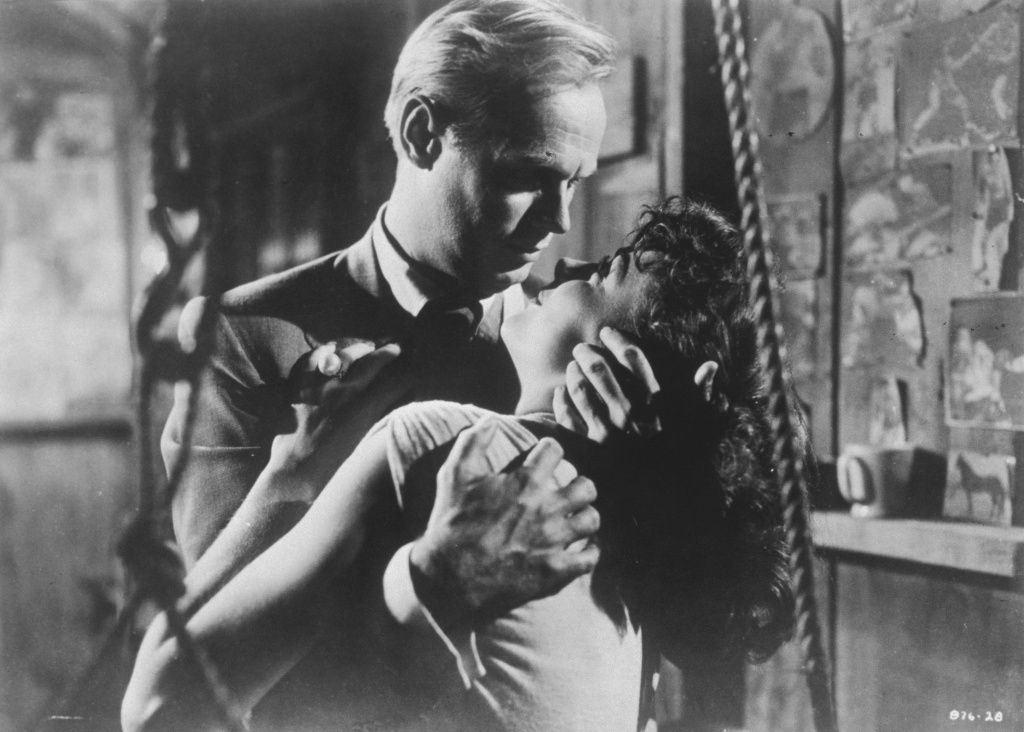
Directed by tough guy directer Samuel Fuller, Pickup on South Street stars noir regular Richard Widmark as Skip McCoy, a pick-pocket who happens to steal the wallet of Candy (Jean Peters). Candy was doing a final favor for ex-boyfriend Joey who, unbeknownst to her is a communist spy, and in Candy’s wallet is a bit of microfilm containing stolen government secrets. Skip and Candy now become involved in a struggle with various government agents and mobsters, all after the microfilm, and finally have to learn to trust each other to survive in a world where the double cross rules.
An unusual story produced at the height of the McCarthy era, Pickup on South Street is a brutal and violent film that barely skirted the production code with its depictions of beatings and life in the mean streets. Made at Twentieth Century Fox, Marilyn Monroe was considered for the role of Candy, but director Fuller eventually gave the part to Peters.
12. In a Lonely Place (1950)
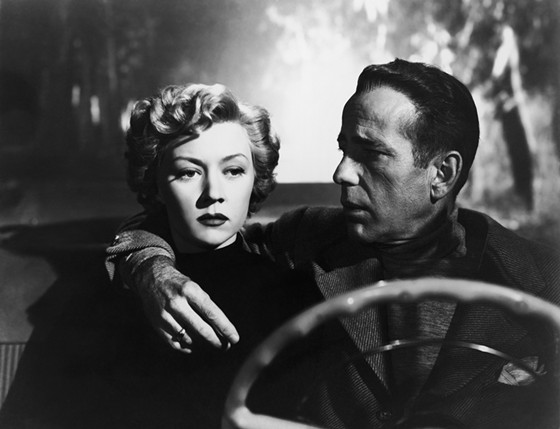
The difference between 1940’s and 1950’s film noir is never more evident than in In a Lonely Place, starring Humphrey Bogart as ‘Dix’ Steele, a down on his luck screenwriter. No longer playing the heroic detective, Bogart’s character is highly problematic. He has an explosive temper and after giving Mildred, a night club hat check girl, a ride home one night, is suspected of murdering her after she is killed later that night. Mildred’s neighbor, Laurel Gray (Gloria Graham) is called on to give testimony about seeing Dix at the apartment that night, and she enters into a tempestuous relationship with Dix while the murder investigation goes on.
In a Lonely Place was directed by Nicholas Ray, who would go on to direct James Dean in his definitive performance in Rebel Without a Cause. The complex characters and conflicting motivations make In a Lonely Place an unusual film noir, and give an indication of how the genre was expanding to take in a wider range of styles.
11. The Hitchhiker (1953)
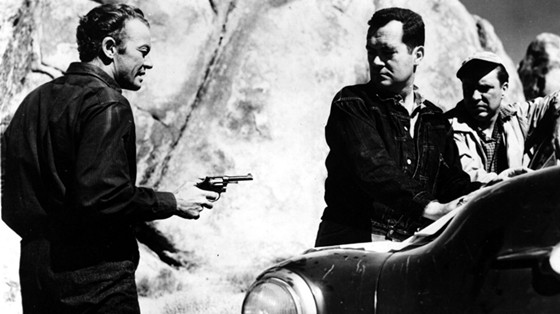
For years, film directing was a totally male dominated profession, and The Hitchhiker is rare in that it was directed by a woman, actress Ida Lupino. Noir regular Edmund O’Brien and Frank Lovejoy play Roy and Gilbert, two friends on a fishing trip in the desert southwest. The two men pick up a hitchhiker who turns out to be the psychotic killer Emmett Myers (William Talman). Myers forces the two men to take him to Mexico in order to escape the police. The harrowing journey finally ends in a border town where Myers tries to take a ferry out of the country.
The film is gritty and suspenseful, and director Lupino substitutes the usual noir urban environment for the arid desert, as the two men try to survive their brutal ordeal at the hands of the killer. The film was based on a real incident that had occurred several years earlier, and it has a realistic sense that adds to the drama. After one more film, Lupino turned to directing TV shows, although she did have a final outing in 1966 with the definitely non noir The Trouble with Angels.
10. Gun Crazy (1950)
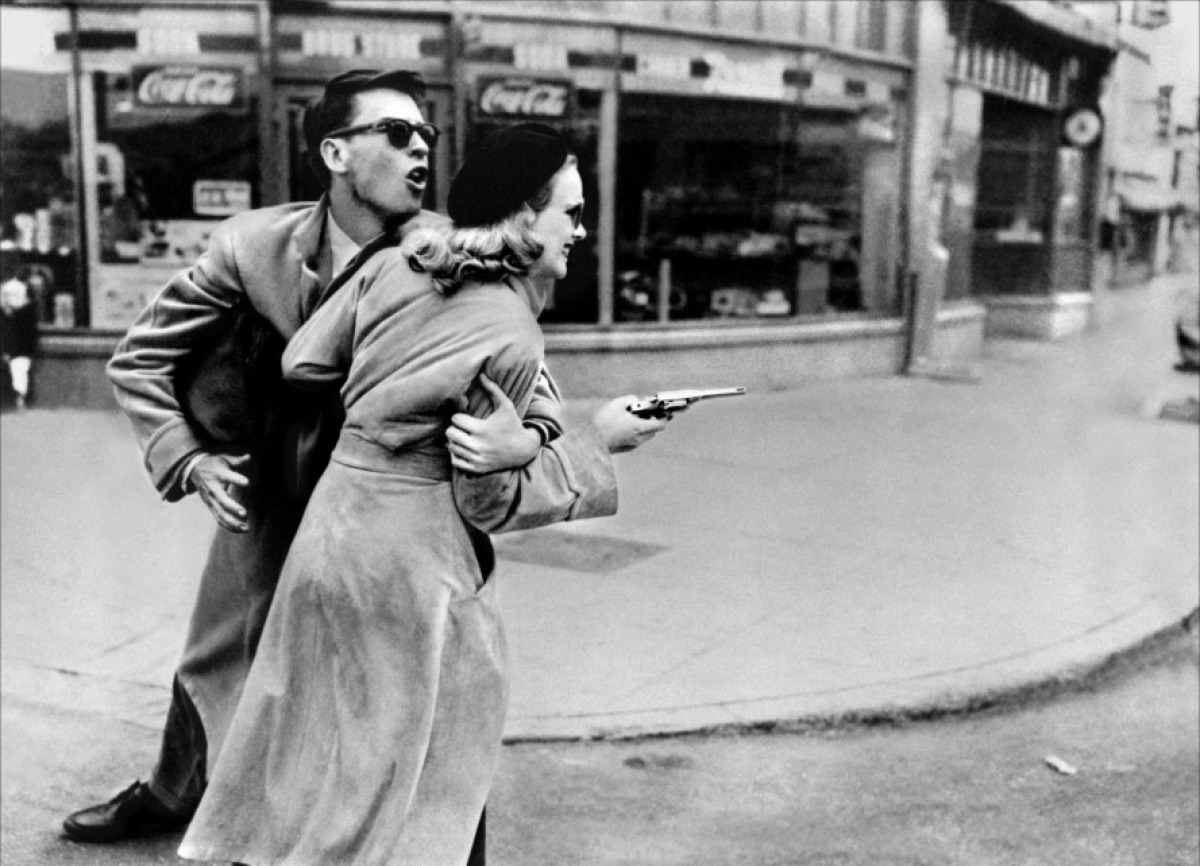
A precursor to Bonnie and Clyde, Gun Crazy is the story of Bart Tare (John Dall) a troubled young man who is good with a gun who meets sharpshooter Annie Laurie Starr (Peggy Cummins) when they work together at a carnival. Fired from the carnival by a jealous boss, Bart and Annie get married and try to live the straight life, but find themselves drawn to a life of crime. The two eventually go on a crime spree of legendary proportions. On the run and tracked by the FBI, the two lovers find themselves hopelessly trapped and eventually doomed, but not before plenty of violence occurs.
Gun Crazy developed something of a cult following in the 70’s and 80’s. It was directed by low budget director Joseph H. Lewis, who also built a cult following and directed several other interesting noir films, including My Name is Julia Ross and The Big Combo.
9. The Night of the Hunter (1955)
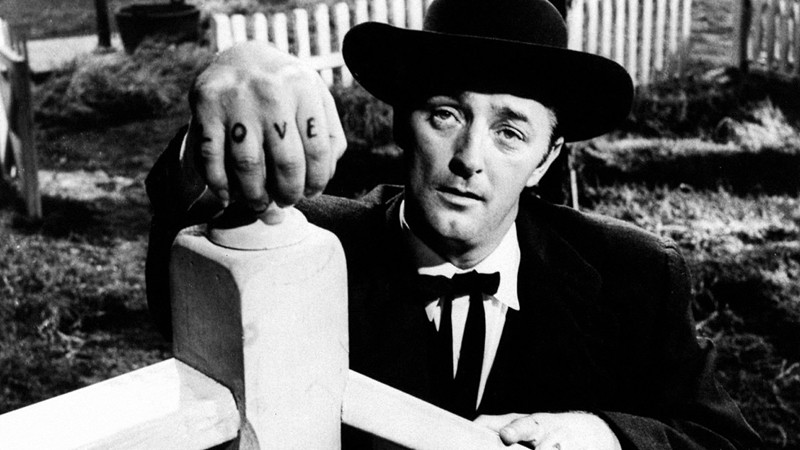
One of the most interesting films of the decade, The Night of the Hunter is notable as the only film directed by the great English actor Charles Laughton. Robert Mitchum plays an unusual part as reverend Harry Powell, a serial killer and self appointed preacher who marries and then kills women. Powell meets Ben Harper in prison; Harper has robbed a bank and stashed the loot in his daughter’s rag doll. Harper is executed and once Powell is out of prison he proceeds to woo Willa (Shelly Winters), Harper’s widow so that he can find the money hidden by Harper.
One of the most interesting, complex and visually expressionistic film noir, The Night of the Hunter was a failure at the box office and Laughton never directed another film again. But the movie has gained a considerable reputation, particularly amongst directors such as David Lynch and Martin Scorsese, who are on the record as admiring the film.
Read more at http://www.tasteofcinema.com/2014/the-15-best-noir-films-of-the-1950s/#zKPHfLtk03WWVyDE.99
8. Sweet Smell of Success (1957)

As the 1950’s wore on, film noir expanded stylistically in ways that would have been unheard of a decade earlier. A great example of this is Sweet Smell of Success, featuring Tony Curtis as Sidney Falco, a theatrical agent who will do anything to place an item in the column of powerful columnist JJ Hunsecker (Burt Lancaster). Hunsecker wants to break up his sister’s relationship with jazz musician Steve Dallas (Martin Milner) and pressures Falco into having an item planted in a rival column that Dallas is a pot smoking commie. The plan seems to work until Dallas confronts JJ and insults him; the columnist then forces Falco to actually frame the musician with drugs.
Shot on location in the mean streets of New York by British director Alexander Mackendrick and based on a short novel by Ernest Lehman, Sweet Smell of Success proved too harsh for 1950’s audiences and failed at the box office (sense a trend here?) but the film’s cynical, unrelentingly harsh vision proved more acceptable to audiences over time, and the film is now regarded as a classic. Barry Levinson paid homage to the film in his own Diner (1982) by having one character do nothing but walk around quoting lines from the film. If you’re going to quote from a movie, it might as well be this one, right Sidney?
7. The Killing (1956)

Young director Stanley Kubrick got his first opportunity to make a Hollywood feature with The Killing, when partner James B. Harris purchased the rights to Lionel White’s novel. Kubrick authored the screenplay with hard boiled writer Jim Thompson. The story is about a heist headed by Johnny Clay (Sterling Hayden) who assembles a team in order to rob the money counting room of a horse racetrack during a big race.
The most notable element of The Killing is the non-linear style of storytelling that Kubrick employed, as the audience gets the details of the big heist from the character’s various points of view. This style was a big influence on later directors, most notably Quentin Tarantino, who utilized this technique in his breakthrough 1992 film Reservoir Dogs. The Killing was a box office failure on its initial release, but was critically praised and Kubrick went on to make his signature early film, Paths of Glory, a year later. The Killing features a great cast including Hadyen, Elisha Cook, Jr., Ted de Corsia, Marie Windsor and Vince Edwards as the thief who tries to steal from the crooks.
6. The Asphalt Jungle (1950)

Another caper film noir featuring Sterling Hayden is the Asphalt Jungle, directed by John Huston. Co-starring Sam Jaffe as “Doc” Riedenschneider, the Asphalt Jungle is the story of jewel heist masterminded by Doc after his release from prison. His team included Dix Handley (Hayden) who wants to use the money to buy back the Kentucky horse farm lost by his father. The operation is financed by crooked lawyer Alonzo Emmerich (Louis Calhern) who says that he will pay the robbers and fence the jewelry himself; Emmerich, however, has a double cross planned. The jewel robbery succeeds, but one of the robbers is accidentally shot by a security guard during the heist. Finally, Doc and Dix figure out that the lawyer does not have their best interests at heart and the entire plan begins to fall apart.
The Asphalt Jungle is notable for an early appearance by Fox contract girl Marilyn Monroe as the young girlfriend of Emmerich, and for the contradiction between the harsh, urban ‘asphalt jungle’ that Dix and his cohorts inhabit and the beautiful, rural horse farm to which he dreams of returning. Dix makes it in the end, but as a typical noir protagonist, his future seems bleak. The Asphalt Jungle is a typical strong effort of John Huston, who directed the first (The Maltese Falcon) and many other fine film noir over the years.
5. D.O.A. (1950)

Released very early in the decade, D.O.A. stars noir regular Edmund O’Brien as Frank Bigelow, as small town accountant who leaves his girlfriend Pamela and comes to San Francisco for a vacation. Frank meets some people and goes to a Fisherman’s Wharf nightclub for a night of wild jazz, where his drink is poisoned by a mysterious stranger. The next day, Frank wakes up not feeling well and after going to a doctor he is told that he has swallowed a poison which will give him only a few days to live. The rest of the film involves Bigelow sorting out the reasons that someone wanted him poisoned and, in effect, solving his own murder.
As was more typical of the previous decade’s film noir, D.O.A. is told in voice over flashback, as Bigelow recounts the events that have led him to be ‘D.O.A.’ at the Los Angeles police station. Directed by former Cinematographer Rudolph Mate and featuring a cast of noir regulars including Pamela Britton, Beverly Garland and Neville Brand, D.O.A. has a unique storyline and was remade in 1988 with Dennis Quaid and Meg Ryan. Our advice: see the original!
4. The Big Heat (1953)

A brutal and violent story of the clash between a gang of criminals and upright police detective Dave Bannion (Glenn Ford) is kicked off when fellow police officer Duncan commits ‘suicide’ under mysterious circumstances. Investigating the case, Bannion comes into contact with syndicate boss Lagana and his second-in-command Vince Stone (played by a menacing Lee Marvin, a dozen years or so before he attained film stardom).
When Bannion’s car is blown up and his wife killed, the policeman resigns the force and goes on a crusade for justice. Bannion stands up to Stone when he tries to bully a woman in a night club, and Stone’s girlfriend Debby Marsh (Gloria Grahame) speaks to Bannion on the street afterwards about her boyfriends nefarious activities. For her efforts, she has a pot of hot coffee thrown in her face later by the vicious Stone. Disfigured, she helps Bannion bring down Stone and Lagana. Suffice it to say, The Big Heat is a tough, gritty crime film, directed with the usual style by noir regular Fritz Lang. A must see.
3. Sunset Boulevard (1950)

Billy Wilder essentially brought the first, ‘classic’ period of film noir to a close in 1950 with Sunset Boulevard, his story of a faded silent film star, Norma Desmond (Gloria Swanson) who takes in a struggling young screenwriter, Joe Gillis (William Holden). Joe is to write Norma’s ‘comeback’ film, but merely ends up a gigolo and her kept man. He finally tries to break away from his keeper when young studio reader Betty Schaefer (Nancy Olson) takes an interest in a script that he has written and begins to meet him late at night to help him finish the story.
But things go wrong when Norma becomes jealous, and Gillis cannot escape from the spider’s web in which he is enmeshed. Finally, he ends up floating in the pool as the assorted media gather and the newsreel cameras roll for Norma’s great final scene: “I’m ready for my close up now, Mr. De Mille!” With former silent film director Erich Von Stroheim along as the creepy butler (and Norman’s ex-husband) Max, Sunset Boulevard has become an iconic film, the classic story of faded tinseltown in decline and the dangers along the way on the boulevard of broken dreams.
2. Kiss Me, Deadly (1955)

Film noir was violent in the 1940’s, but became even more violent and brutal in the 1950’s as the production code slowly lifted. First and foremost of this new breed of protagonists was Mickey Spillane’s Mike Hammer, portrayed in this film by the brooding Ralph Meeker. One night driving on a dark road, Hammer picks up Christina (Cloris Leachman in an early appearance) hitchhiking wearing nothing but a trench coat. When Christina is killed and Hammer ends up in a hospital, he begins a search to find out what the young woman – who had recently escaped from a mental institution – was so afraid of when Hammer encountered her.
With the help of his trusty secretary Velda, Hammer finds Lily Carver (Gaby Rodgers), Christine’s roommate who is after, what she calls “the great whatsit”, a box that turns out to contain a dangerous, glowing substance that Lily thinks is worth a fortune. The explosive end of the film reveals the truth about “the great whatsit” and the people who are after it, and indicated a new direction for noir films in which the growing paranoia about atomic and nuclear power would replace the genre’s former pre-occupations.
Kiss Me Deadly was shot quickly in and around Los Angeles by director Robert Aldrich, who would later make such classics as Whatever Happened to Baby Jane (1962) and The Longest Yard (1974). The film’s ending was changed and altered after its release, but the original ending has finally been restored and the film has been released properly on blu-ray.
1. Touch of Evil (1958)

By the end of the decade, film noir as a style had mostly petered out. When Universal hired star Charlton Heston to appear in a thriller with Janet Leigh and Orson Welles, Heston assumed that Welles would direct the film and insisted that Universal give him a chance. With little time to prepare, Welles re-wrote the script based on the novel Badge of Evil and turned it into a memorable classic, featuring cameo appearances by Hollywood friends Marlene Dietrich, Zsa Zsa Gabor and Joseph Cotton.
Heston is Miguel Vargas, honeymooning in a Mexican-American border town with wife Suzy (Leigh). He is on his way to Mexico City to testify against the drug lord Grandi, but is drawn into the investigation of the explosion death of an American contractor that he and Suzy witness. The investigation is handled by police captain Hank Quinlan (Welles) and his faithful assistant Menzies (Joseph Calleia) who suspect the man was killed by Sanchez, a shoe clerk who was living with the murdered man’s daughter against his wishes. When sticks of dynamite are found in Sanchez’s apartment, Quinlan thinks he has his killer but Vargas thinks the evidence has been planted and sets out to reveal a pattern of police corruption on Quinlan’s part.
Quinlan eventually convinces Grandi’s brother, Uncle Joe (Akim Tamiroff) to kidnap Suzy and discredit Vargas by planting drugs on her. Touch of Evil features one of the most justifiably famous long shots in the history of film, the three plus minute opening shot in which the camera follows Vargas and Suzy walking near the car after a time bomb has been planted in it, until the bomb finally explodes. Welles bold visual style was so potent and daring but was unconventional, and Universal reshot and reedited the film in the hopes of making it more commercial.
After dying a quick death at the box office, the reputation of Touch of Evil grew over the years (as did almost all of Welles’ films) until the film was restored and re-released in 1998 with as much of Welles’ original vision as possible included. Touch of Evil is a journey into a nightmare world of corruption, sin and evil, created by a visionary director and master filmmaker, and had a substantial influence on many films that came after it – particularly Hitchcock’s Psycho – but it also largely signaled the end of the era of the film noir. See it and see it as many times as you can.
Author Bio: Jim Davidson is a 1980 graduate of Northwestern University’s Radio-TV-Film Dept. He lives in the San Francisco Bay Area and has been a video producer since 1987. Jim has written articles for Images Film journal and is currently working on a book about the movie Harold and Maude.
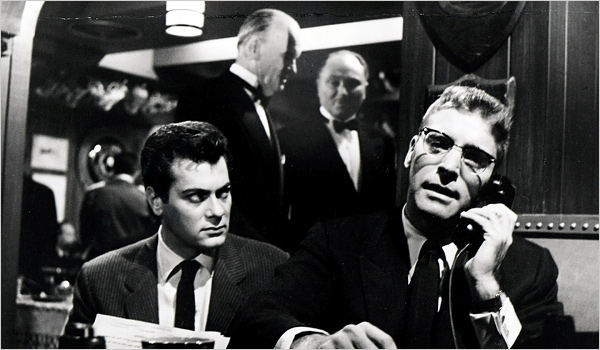
As the 1950’s wore on, film noir expanded stylistically in ways that would have been unheard of a decade earlier. A great example of this is Sweet Smell of Success, featuring Tony Curtis as Sidney Falco, a theatrical agent who will do anything to place an item in the column of powerful columnist JJ Hunsecker (Burt Lancaster). Hunsecker wants to break up his sister’s relationship with jazz musician Steve Dallas (Martin Milner) and pressures Falco into having an item planted in a rival column that Dallas is a pot smoking commie. The plan seems to work until Dallas confronts JJ and insults him; the columnist then forces Falco to actually frame the musician with drugs.
Shot on location in the mean streets of New York by British director Alexander Mackendrick and based on a short novel by Ernest Lehman, Sweet Smell of Success proved too harsh for 1950’s audiences and failed at the box office (sense a trend here?) but the film’s cynical, unrelentingly harsh vision proved more acceptable to audiences over time, and the film is now regarded as a classic. Barry Levinson paid homage to the film in his own Diner (1982) by having one character do nothing but walk around quoting lines from the film. If you’re going to quote from a movie, it might as well be this one, right Sidney?
7. The Killing (1956)
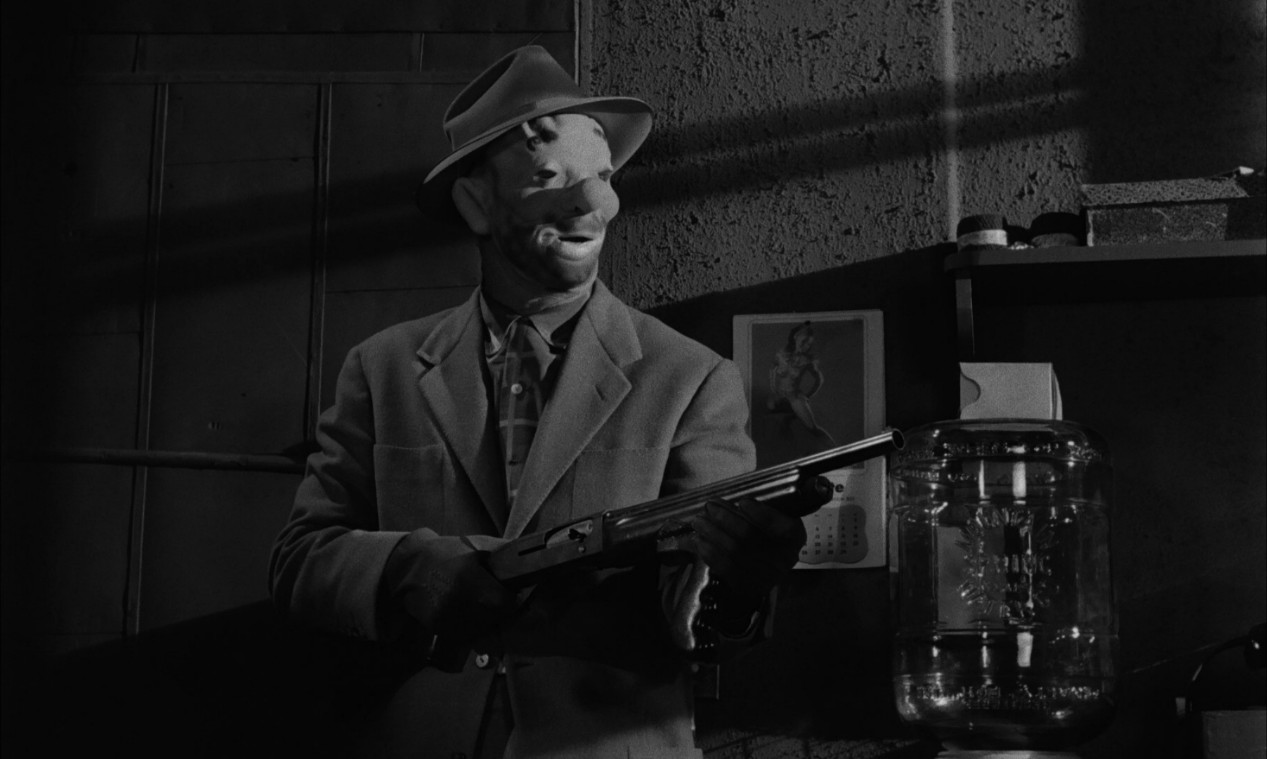
Young director Stanley Kubrick got his first opportunity to make a Hollywood feature with The Killing, when partner James B. Harris purchased the rights to Lionel White’s novel. Kubrick authored the screenplay with hard boiled writer Jim Thompson. The story is about a heist headed by Johnny Clay (Sterling Hayden) who assembles a team in order to rob the money counting room of a horse racetrack during a big race.
The most notable element of The Killing is the non-linear style of storytelling that Kubrick employed, as the audience gets the details of the big heist from the character’s various points of view. This style was a big influence on later directors, most notably Quentin Tarantino, who utilized this technique in his breakthrough 1992 film Reservoir Dogs. The Killing was a box office failure on its initial release, but was critically praised and Kubrick went on to make his signature early film, Paths of Glory, a year later. The Killing features a great cast including Hadyen, Elisha Cook, Jr., Ted de Corsia, Marie Windsor and Vince Edwards as the thief who tries to steal from the crooks.
6. The Asphalt Jungle (1950)
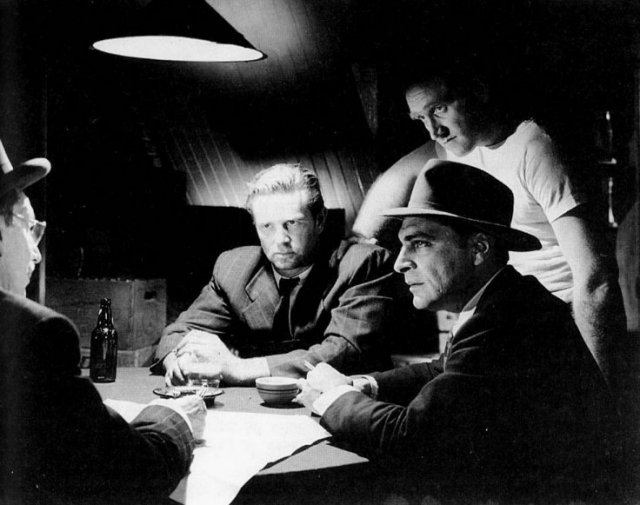
Another caper film noir featuring Sterling Hayden is the Asphalt Jungle, directed by John Huston. Co-starring Sam Jaffe as “Doc” Riedenschneider, the Asphalt Jungle is the story of jewel heist masterminded by Doc after his release from prison. His team included Dix Handley (Hayden) who wants to use the money to buy back the Kentucky horse farm lost by his father. The operation is financed by crooked lawyer Alonzo Emmerich (Louis Calhern) who says that he will pay the robbers and fence the jewelry himself; Emmerich, however, has a double cross planned. The jewel robbery succeeds, but one of the robbers is accidentally shot by a security guard during the heist. Finally, Doc and Dix figure out that the lawyer does not have their best interests at heart and the entire plan begins to fall apart.
The Asphalt Jungle is notable for an early appearance by Fox contract girl Marilyn Monroe as the young girlfriend of Emmerich, and for the contradiction between the harsh, urban ‘asphalt jungle’ that Dix and his cohorts inhabit and the beautiful, rural horse farm to which he dreams of returning. Dix makes it in the end, but as a typical noir protagonist, his future seems bleak. The Asphalt Jungle is a typical strong effort of John Huston, who directed the first (The Maltese Falcon) and many other fine film noir over the years.
5. D.O.A. (1950)
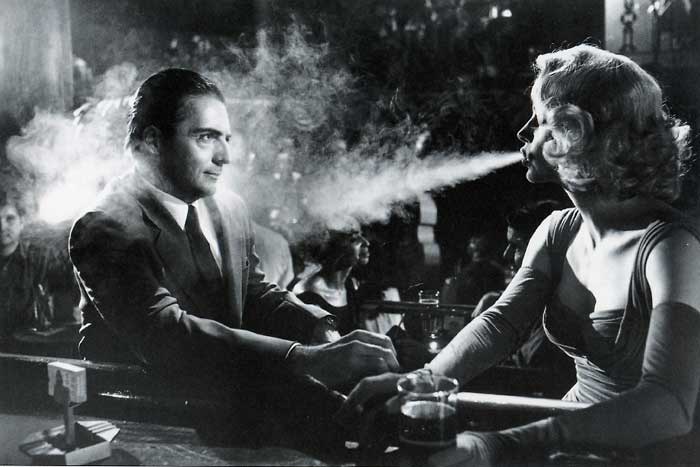
Released very early in the decade, D.O.A. stars noir regular Edmund O’Brien as Frank Bigelow, as small town accountant who leaves his girlfriend Pamela and comes to San Francisco for a vacation. Frank meets some people and goes to a Fisherman’s Wharf nightclub for a night of wild jazz, where his drink is poisoned by a mysterious stranger. The next day, Frank wakes up not feeling well and after going to a doctor he is told that he has swallowed a poison which will give him only a few days to live. The rest of the film involves Bigelow sorting out the reasons that someone wanted him poisoned and, in effect, solving his own murder.
As was more typical of the previous decade’s film noir, D.O.A. is told in voice over flashback, as Bigelow recounts the events that have led him to be ‘D.O.A.’ at the Los Angeles police station. Directed by former Cinematographer Rudolph Mate and featuring a cast of noir regulars including Pamela Britton, Beverly Garland and Neville Brand, D.O.A. has a unique storyline and was remade in 1988 with Dennis Quaid and Meg Ryan. Our advice: see the original!
4. The Big Heat (1953)
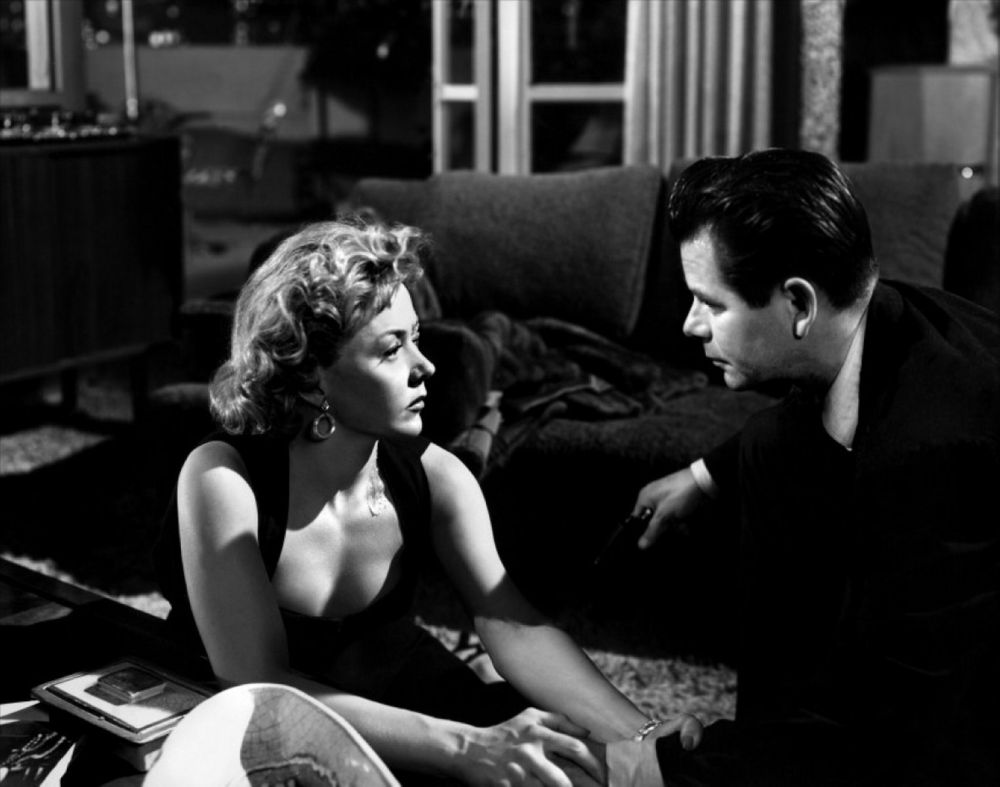
A brutal and violent story of the clash between a gang of criminals and upright police detective Dave Bannion (Glenn Ford) is kicked off when fellow police officer Duncan commits ‘suicide’ under mysterious circumstances. Investigating the case, Bannion comes into contact with syndicate boss Lagana and his second-in-command Vince Stone (played by a menacing Lee Marvin, a dozen years or so before he attained film stardom).
When Bannion’s car is blown up and his wife killed, the policeman resigns the force and goes on a crusade for justice. Bannion stands up to Stone when he tries to bully a woman in a night club, and Stone’s girlfriend Debby Marsh (Gloria Grahame) speaks to Bannion on the street afterwards about her boyfriends nefarious activities. For her efforts, she has a pot of hot coffee thrown in her face later by the vicious Stone. Disfigured, she helps Bannion bring down Stone and Lagana. Suffice it to say, The Big Heat is a tough, gritty crime film, directed with the usual style by noir regular Fritz Lang. A must see.
3. Sunset Boulevard (1950)
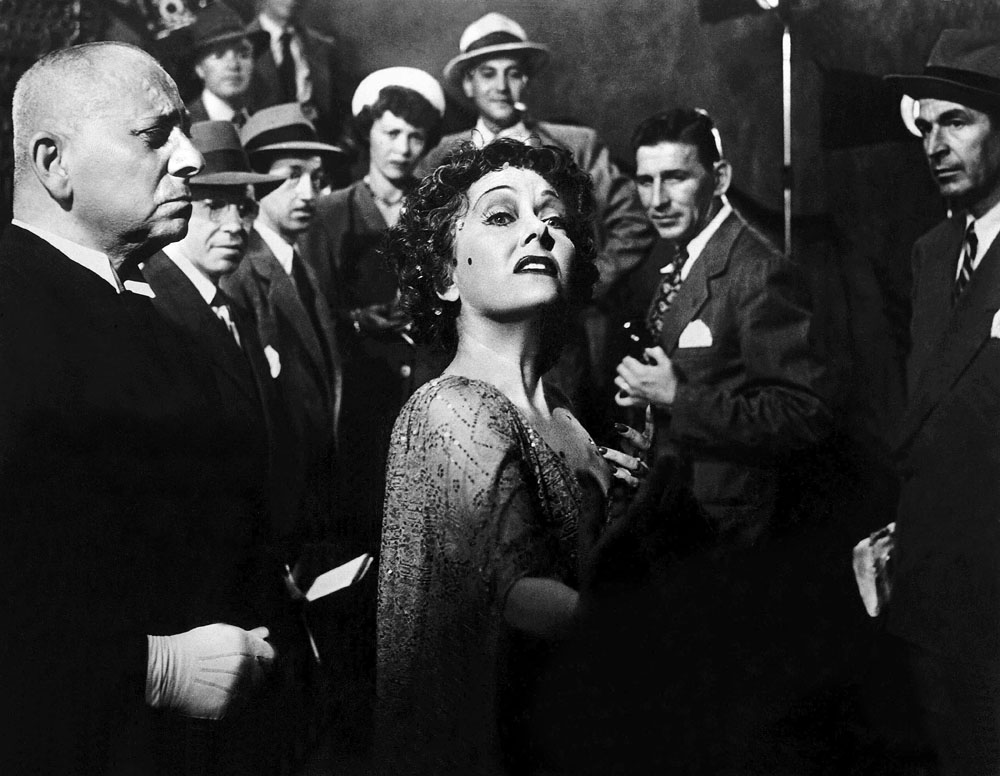
Billy Wilder essentially brought the first, ‘classic’ period of film noir to a close in 1950 with Sunset Boulevard, his story of a faded silent film star, Norma Desmond (Gloria Swanson) who takes in a struggling young screenwriter, Joe Gillis (William Holden). Joe is to write Norma’s ‘comeback’ film, but merely ends up a gigolo and her kept man. He finally tries to break away from his keeper when young studio reader Betty Schaefer (Nancy Olson) takes an interest in a script that he has written and begins to meet him late at night to help him finish the story.
But things go wrong when Norma becomes jealous, and Gillis cannot escape from the spider’s web in which he is enmeshed. Finally, he ends up floating in the pool as the assorted media gather and the newsreel cameras roll for Norma’s great final scene: “I’m ready for my close up now, Mr. De Mille!” With former silent film director Erich Von Stroheim along as the creepy butler (and Norman’s ex-husband) Max, Sunset Boulevard has become an iconic film, the classic story of faded tinseltown in decline and the dangers along the way on the boulevard of broken dreams.
2. Kiss Me, Deadly (1955)
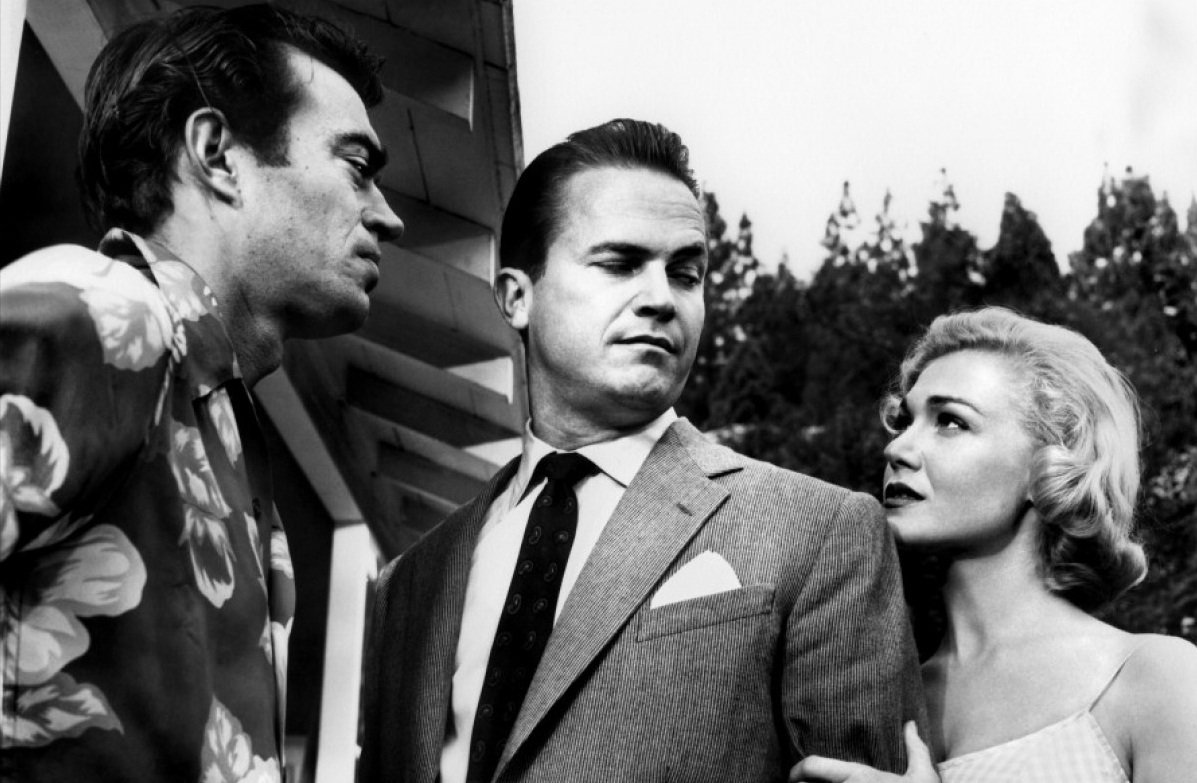
Film noir was violent in the 1940’s, but became even more violent and brutal in the 1950’s as the production code slowly lifted. First and foremost of this new breed of protagonists was Mickey Spillane’s Mike Hammer, portrayed in this film by the brooding Ralph Meeker. One night driving on a dark road, Hammer picks up Christina (Cloris Leachman in an early appearance) hitchhiking wearing nothing but a trench coat. When Christina is killed and Hammer ends up in a hospital, he begins a search to find out what the young woman – who had recently escaped from a mental institution – was so afraid of when Hammer encountered her.
With the help of his trusty secretary Velda, Hammer finds Lily Carver (Gaby Rodgers), Christine’s roommate who is after, what she calls “the great whatsit”, a box that turns out to contain a dangerous, glowing substance that Lily thinks is worth a fortune. The explosive end of the film reveals the truth about “the great whatsit” and the people who are after it, and indicated a new direction for noir films in which the growing paranoia about atomic and nuclear power would replace the genre’s former pre-occupations.
Kiss Me Deadly was shot quickly in and around Los Angeles by director Robert Aldrich, who would later make such classics as Whatever Happened to Baby Jane (1962) and The Longest Yard (1974). The film’s ending was changed and altered after its release, but the original ending has finally been restored and the film has been released properly on blu-ray.
1. Touch of Evil (1958)
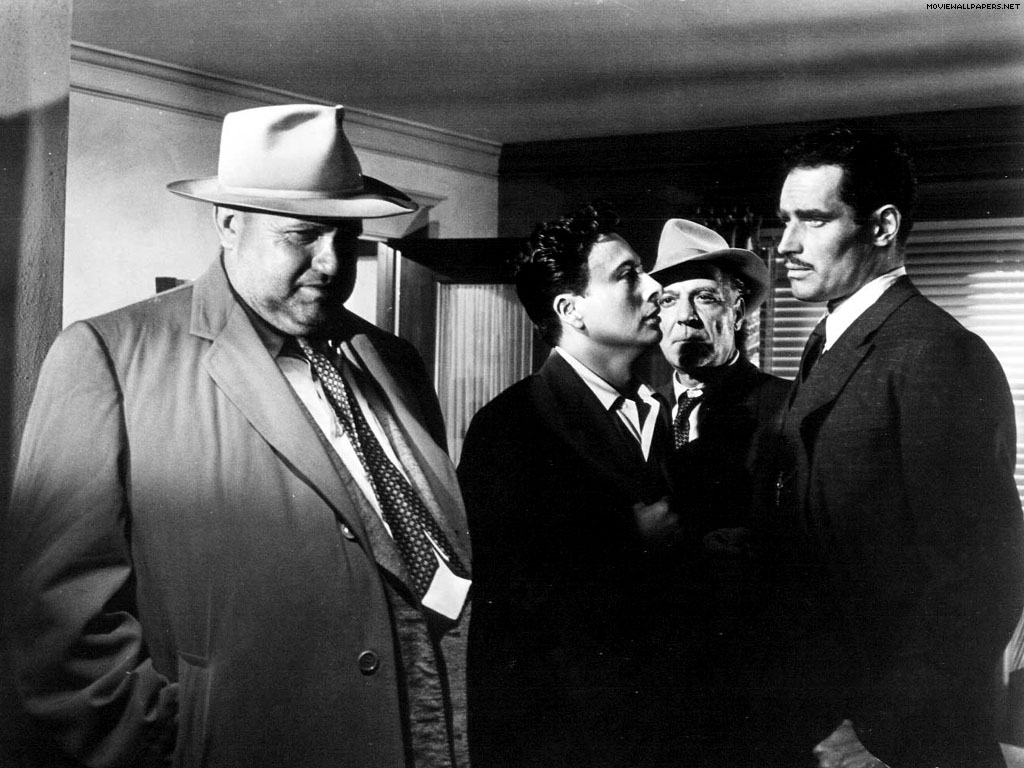
By the end of the decade, film noir as a style had mostly petered out. When Universal hired star Charlton Heston to appear in a thriller with Janet Leigh and Orson Welles, Heston assumed that Welles would direct the film and insisted that Universal give him a chance. With little time to prepare, Welles re-wrote the script based on the novel Badge of Evil and turned it into a memorable classic, featuring cameo appearances by Hollywood friends Marlene Dietrich, Zsa Zsa Gabor and Joseph Cotton.
Heston is Miguel Vargas, honeymooning in a Mexican-American border town with wife Suzy (Leigh). He is on his way to Mexico City to testify against the drug lord Grandi, but is drawn into the investigation of the explosion death of an American contractor that he and Suzy witness. The investigation is handled by police captain Hank Quinlan (Welles) and his faithful assistant Menzies (Joseph Calleia) who suspect the man was killed by Sanchez, a shoe clerk who was living with the murdered man’s daughter against his wishes. When sticks of dynamite are found in Sanchez’s apartment, Quinlan thinks he has his killer but Vargas thinks the evidence has been planted and sets out to reveal a pattern of police corruption on Quinlan’s part.
Quinlan eventually convinces Grandi’s brother, Uncle Joe (Akim Tamiroff) to kidnap Suzy and discredit Vargas by planting drugs on her. Touch of Evil features one of the most justifiably famous long shots in the history of film, the three plus minute opening shot in which the camera follows Vargas and Suzy walking near the car after a time bomb has been planted in it, until the bomb finally explodes. Welles bold visual style was so potent and daring but was unconventional, and Universal reshot and reedited the film in the hopes of making it more commercial.
After dying a quick death at the box office, the reputation of Touch of Evil grew over the years (as did almost all of Welles’ films) until the film was restored and re-released in 1998 with as much of Welles’ original vision as possible included. Touch of Evil is a journey into a nightmare world of corruption, sin and evil, created by a visionary director and master filmmaker, and had a substantial influence on many films that came after it – particularly Hitchcock’s Psycho – but it also largely signaled the end of the era of the film noir. See it and see it as many times as you can.
Author Bio: Jim Davidson is a 1980 graduate of Northwestern University’s Radio-TV-Film Dept. He lives in the San Francisco Bay Area and has been a video producer since 1987. Jim has written articles for Images Film journal and is currently working on a book about the movie Harold and Maude.
Pages: 1 2
SHARE THIS STORY


Read more at http://www.tasteofcinema.com/2014/the-15-best-noir-films-of-the-1950s/2/#4Y90PyUGAI3B5F1d.99
Wednesday, April 30, 2014
尋找成瀨巳喜男
作者:舒明 - 一, 2014-04-28 22:08
1935年,成瀨巳喜男(1905.8.20 - 1969.7.2)的有聲片《願妻如薔薇》被《電影旬報》選為當年最佳電影。該片於1937年4月在美國紐約以《Kimiko》之名公映,但未獲好評。成瀨生前只在日本有名氣,逝世後在歐美十多年來仍然寂寂無聞,要待1984-1985年他的大型回顧展在芝加哥和紐約等八個城市巡迴展出後,才引起美國文化界的注意。拍過電影的美國作家及評論家蘇珊‧桑塔格(Susan Sontag,1933-2004)生前曾大力推薦成瀨為電影大師,令他在美國的聲望逐漸提升。2015年是成瀨110歲冥壽,也是其傑作《浮雲》(1955)問世的60周年紀念。希望中港台的電影文化機構,能夠在2015年舉辦有規模的「成瀨巳喜男回顧展」,好讓中國的電影觀眾有機會在戲院欣賞他那些不可言喻和自然質樸的電影傑作。

成瀨巳喜男向被公認為日本五大導演之一,他的傑作《浮雲》也曾多次上榜日本十大電影的前四位。小津安二郎曾經說過,他不能拍攝的電影,是溝口健二的《祇園姊妹》與成瀨巳喜男的《浮雲》。成瀨擅長描寫女性與家庭,特別著意刻畫夫婦和男女的關係。台灣導演侯孝賢(1947- )與楊德昌(1947-2007)都非常欣賞《浮雲》。1992年兩人回應英國《視與聽》的投選邀請時,不約而同地推舉《浮雲》為世界十大電影之一。香港導演許鞍華(1947- )在2002年和2012年的兩次投選中,亦先後選了《浮雲》為世界十大電影之第五位與第六位。
 根據黃仁《日本電影在臺灣》(台北:秀威資訊科技,2008)一書中的附錄〈1915-1945年臺灣公映之日本電影片目〉(選錄)顯示,從1915年到1945年,約有20部成瀨巳喜男的電影在日本統治的台灣放映,而據另一個附表〈1950-1972年臺灣上映之日本電影片目〉所顯示,在戰後這23年上映的604部日本片中,只有一部《豔妓》(1960,成瀨巳喜男與川島雄三合導,原名《夜の流れ》)是成瀨的作品。回看中國大陸的情況,1985年10月,在北京的「日本電影回顧展」中放映的40部影片裡,代表成瀨的影片亦只有一部《浮雲》。至於在香港,觀看成瀨電影的機會則比較多。1987年第11屆香港國際電影節舉辦的「成瀨巳喜男電影回顧展」,就放映了他的20部電影,包括曾入選《電影旬報》年度十大電影的《別離》(1933)、《每夜的夢》(1933)、《飯》(1951)、《媽媽》(1952)、《閃電》(1952)、《兄妹》(1953)、《晚菊》(1954)、《山之音》(1954)、《浮雲》、《流》(1956) 與《亂雲》(1967),以及十大不入但十分優秀的《女人踏上樓梯時》(1960)、《放浪記》(1962) 和《情迷意亂》(1964) 等。1992年2月,香港藝術中心推出「日本大師補遺──成瀨巳喜男特輯」,放映了他的《浮雲》、《驟雨》(1956)、《亂雲》與《娘、妻、母》(1960)。1995年8月和10月,香港藝術中心又重映了成瀨的《閃電》、《兄妹》、《浮雲》和《驟雨》。1997年春,第21屆香港國際電影節公映了成瀨的《女人的哀愁》(1937)。
中文電影書刊中的成瀨
由於在大銀幕上欣賞成瀨巳喜男影片的機會有限,不少影迷於1980年代起就通過錄影帶、VCD 和 DVD 去觀看成瀨的電影。如有興趣進一步研究,就會參考一些評論成瀨巳喜男的文章。1985年,台北志文出版社印行了佐藤忠男著、廖祥雄譯的《日本電影的巨匠們》,書中評論成瀨巳喜男的專章長達28頁(第129-156頁)。跟據佐藤忠男(1930- )的介紹,成瀨巳喜男生於東京四谷,父親為裁縫,因家境貧窮,成瀨15歲就進入松竹蒲田製片廠當小學徒,為人極為沉默寡言,後來做了十年副導演才升任導演,於中日戰爭爆發後拍攝了敘述父親同意長子升學的《勞動的一家》(1939),把貧窮家庭的清寒生活描寫得很寫實,是一部能使人體會到窮人悲哀的日本傳統庶民電影傑作。佐藤認為:「成瀨巳喜男描寫到處有的平凡家庭,到處有的日常生活,而從中釀出無與倫比的溫暖情感……小津的電影給人的印象是中規中矩地在一定的形式中產生的美術品,相對地,成瀨的電影好像在路過的小巷子裡,無意中在開著門的人家門口窺見的庶民生活斷面,乍見之下,給人一種漫不經心而直爽的印象。那種溫柔而和藹可親的感覺,別有一番風味。」(第152頁) 佐藤又稱讚成瀨的電影:「在成績最好的一九五O年代,與原著者林芙美子、編劇家田中澄江與水木洋子合作的一系列作品,都可說是能勝過小津安二郎作品的傑作。」(第153頁)

1992年6月,在台北出版的第29期《影響電影雜誌》,刊登了介紹日本電影黃金時代四位巨匠(小津安二郎、溝口健二、成瀨巳喜男、山中貞雄)的特輯(第70-125頁),收錄了林智祥評論成瀨的三篇文章:〈作者中的作者〉(第91-95頁)、〈成瀨三口組〉(第108-110頁) 與〈《閃電》(稻妻)〉(第118-119頁)。林智祥在〈作者中的作者〉認為,成瀨是個謹守崗位的片廠導演,有一貫的主題,「和溝口一樣,擅於刻畫女性角色的心理……又和小津一樣,執著於日本傳統的家庭倫理……成瀨片中的女性從來不會像溝口的那樣,步上某種儀式性的自我犧牲……小津著重在不同世代的直系關係,成瀨則偏好旁系的家族成員關係。」(第93頁) 林智祥又推許成瀨實而不華的電影風格,謂「從三O年代起,成瀨三、四十年的片廠生涯磨練出極為洗煉、圓熟的導演技術,他經營出來的鏡頭也許不像強烈風格家那麼搶眼,或華麗、或新奇、或搞怪,但是時常令人激賞其恰到好處,鏡頭的長度或攝影機的角度皆不容增減半分。在其中,自然流露『作者』個人的獨特風格。」(第93頁) 林智祥並進一步分析了成瀨的「回頭一望的演出法」、「視線連戲法」和「室內外交界處的攝影法」。(第93-95頁)
1997年11-12月在台北出版、總號第90期的《電影欣賞》雙月刊,是「日本通俗劇」的專號,收錄了評論小津安二郎、成瀨巳喜男、山田洋次、溝口健二與木下惠介五位電影作家的十篇文章,包括和成瀨有關的以下三篇:范健佑的〈懷才不遇的電影大師──成瀨巳喜男〉(第43-55頁),李達義的〈成瀨的歷史悲歌〉(第56-60頁)和姚立群的〈與芙美子共餐〉(第61-65頁)。其中李達義之文論述《閃電》、《兄妹》與《浮雲》三部影片,姚立群之文暢談成瀨改編林芙美子的遺作《飯》,而范健佑一文的結論是成瀨的作品有如寶山一樣深奧有趣,提醒觀眾「不妨注意一下每部電影中經常會出現的東西,如下雨、颳風、飄雪,導演經常利用這些自然現像來暗喻男女主角的心情;此外還有以一、二樓的相異點來劃分界線;另外就是二人平行走路的部份很多,究竟什麼樣的人才有資格並肩走路呢?」(第50頁)。范文在注釋後附錄了逾四頁的三個表,即電影的小說原著表、成瀨巳喜男年表和成瀨巳喜男電影年表,甚有參考價值。
上引台灣書刊的成瀨資料,先後出版於1985年、1992年和1997年,但早在1963年,北京中國電影出版社已刊行了岩崎昶著、鍾理譯的《日本電影史》,書中第八章第八節有兩頁多談論成瀨巳喜男。岩崎昶(1903-1981) 指出:「他既像小津那樣對於日本的『家庭』抱有無窮的興趣,同時又和溝口一樣,集中精力描寫日本的『婦女』。」(第259頁);「成瀨描寫的家庭不同於小津的『家庭』,它只有橫的關係。成瀨影片的中心主題,不是父母和子女的關係,而是夫妻關係。」(第260頁);「根據他的厭世主義,成瀨對人的看法大概就是這樣:不僅是夫婦之間的關係,凡是所謂男女的愛情,都是既不神聖也不崇高的。男人們就像動物一樣沒有骨氣,只顧自己,而且是好色之徒。而女人們儘管明知這樣的男人是庸俗之輩,可是還是要愛他們,照顧他們,或是因為性的關係而使他們湊在一起。」(第261頁)

岩崎昶這本書原名《映畫史》,1961年由東京東洋新報社出版,兩年後即有中文譯本。《映畫史》刊行的前兩年,三十多歲的約瑟夫‧安德森和唐納德‧里奇已出版了他們的英文經典大作《日本電影:藝術與工業》,初版刊於1959年,厚456頁;第二版刊於1982年,厚526頁。新版只添增了附於書末的兩篇附錄和兩份參考書目,對初版從第19-428頁的17章文字,完全沒有任何修改。這四百多頁的原著,51年後才終於有中文譯本,由張江南、王星譯,長春的吉林出版集團於2010年出版,本來對讀者來說是一大喜訊,但翻閱一下,卻令人感到失望。此書的第15章評論了九位導演,成瀨巳喜男是第四位。他那一節的次段第一句,英文原文是:"Naruse's view of the world, if one of the most consistent, is also one of the least comforting."(第363頁)含義是:「成瀨對世界的看法可說是前後一致,而又總是令人深感不安的。」中譯本把這簡單易懂的一句翻譯為:「成瀨的世界觀既是大部份人堅持的,也是少數人感到欣慰的。」(第327頁)無疑是明顯的誤解和錯譯。一葉知秋,看來這個譯本是不可信賴的,讀者最好還是直接閱讀原著。僑居東京逾半世紀的唐納德‧里奇(Donald Richie,1924-2013),於1965年和1974年只出版了專論黑澤明和小津安二郎的兩本名著,推薦成瀨巳喜男的責任遂由奧蒂‧波克(Audie Bock,1945- )與凱薩琳‧羅素 (Catherine Russell,1959- )二人接棒完成。博克於1984年為芝加哥藝術學院電影中心主辦的成瀨回顧展編寫了厚33頁的《成瀨巳喜男:日本電影大師》,介紹了他的25部電影。而羅素經多年研究後由杜克大學出版社刊行了她的《成瀨巳喜男的電影:女性和日本現代性》(2008),書厚465頁。由連城翻譯的中譯本,將由上海復旦大學出版社刊行。
曾多次主演成瀨的影片的高峰秀子(1924-2010),在她的自傳《從影五十年》(盛凡夫、杞元譯,北京:文化藝術出版社,1986) 中,有一章特別懷念成瀨巳喜男(第242-249頁),並戲稱他為「壞叔叔」,因為成瀨曾說童星時代的秀子很愛賣弄聰明,是個不討人喜歡的孩子。而且成瀨對攝製組的人確實很壞:他從來不給任何人提前看分鏡頭劇本。高峰說成瀨的言談少得給人一種似乎陰險的錯覺。「我不記得從他那裡學到過什麼演技,他總是一言不發,於是我也就一言不發地去表演。結果,誰也沒有講什麼,一個鏡頭就被通過了,接著,我便不發一言地開始表演下一個鏡頭的戲。」(第244頁) 「我參加演出的《售票員秀子》、《閃電》、《妻子的心》、《流》、《胡鬧》、《女人上台階的時候》、《流浪記》、《亂》和《浮雲》等影片,全都是以窮街陋巷為舞台,反映庶民生活的作品。他導演的影片,鏡頭裡經常是垃圾遍地的景象、破舊的工人住房,撈面和茶泡飯以及其貌不揚的男女。另外,插入的畫面準有化妝廣告人上場。這就是成瀨巳喜男的電影世界。」(第245頁)

有關成瀨戰前作品的論述,可以參考山本喜久男(1931-2000)的巨著《日美歐比較電影史──外國電影對日本電影的影響》(郭二民等譯,北京:中國電影出版社,1991)。彼德‧海 (Peter B. High)在《帝國的銀幕:十五年戰爭與日本電影》(楊紅雲譯,北京:中國電影出版社,2012)中,亦有談論成瀨的《勞動者一家》(第135-137頁)。在三O年代,黑澤明曾當過成瀨的助導,所以四方田犬彥(1953- ) 在《日本電影100年》(王眾一譯,北京:生活‧讀書‧新知三聯書店,2006)的這段短評份外有趣:「在黑澤明耀眼光環的映襯下,其他人很容易黯然失色。但成瀨巳喜男在50年代還是取材於林芙美子原作,拍攝了幾部細緻、圓熟風格的電影。他喜歡表現的主人公與黑澤明的主人公正好相反,憂鬱而優柔寡斷,必須依靠和他人的關係才得以存在。如果日本電影中有合適用『女性風格』來形容的導演的話,那就是這一時期的成瀨巳喜男了。」(第154頁)
2008年桂林的廣西師範大學出版社刊行了湯禎兆(1969- )的《日本映畫驚奇:從大師名匠到法外之徒》,書中有三篇評論成瀨的文章:〈成瀨電影的視線內在節奏〉(第36-39頁),〈成瀨電影中的女性芳心〉(第40-41頁),和〈浮雲蔽白日〉(第42-49頁)。羅展鳳在其推薦序〈日本映畫評論達人:湯禎兆〉裡說:「我看湯禎兆在撰寫成瀨巳喜男的文章中引述歷年來各學者對這位導演在燈光與鏡頭方面語法運用的研究,就大為欣賞。讀罷此文,方知日本有很多學者如何為成瀨巳喜男的電影語法下過工夫,加深了我對其電影裡有關『外廊為中心』的注目……最後,湯禎兆再以成瀨的著名傑作《浮雲》做結構對比,從天氣溫度、場景以至光暗運用等層層揭開,更是一次從電影展開的人心解讀。」(第7頁)
延伸閱讀:
- 《成瀨巳喜男回顧》,梁慕齡編,香港:市政局,1987。收錄了蓮實重彥著、厲河譯的〈與「重估時代」的不幸相對抗〉(第2-6頁),蓮實重彥訪問、厲河譯的〈訪問攝影師玉井正夫〉(第16-20頁),〈20部電影節目簡介〉(第23-35頁),和〈成瀨巳喜男作品年表〉(第46-48頁) 。
- 《然後有了光──22位導演作品選析》,王瑞祺著,香港:香港電影評論學會,1998。內收〈步與浮雲齊──談成瀨巳喜男的代表作《浮雲》〉一文(第100-111頁)。
- 《日本戰後電影史》,小笠原隆夫著,苗棣、劉鳳梅、周月亮譯,北京:北京廣播學院出版社,2001。內收〈成瀨電影的結構──攝影機位置和偶然性支配以及主題〉一章(第155-176頁)。
- 《日本電影十大》,鄭樹森、舒明著,上海:上海書店,2011。內收〈成瀨巳喜男〉(第98-113頁) 與〈成瀨巳喜男全片目〉(第225-227頁)。
- 《日本電影大師們》第一冊,佐藤忠男著,王乃真譯,北京:中國電影出版社,2013。內收〈成瀨巳喜男〉一章 (第1-46頁)。
- 《日本電影大師》,奧蒂‧波克著,張漢輝譯。上海:復旦大學出版社,2014。內收〈成瀨巳喜男〉一章 (第127-188頁,後31頁為成瀨巳喜男作品年表)。
Subscribe to:
Posts (Atom)