Tuesday, November 18, 2014

全世界最美的一百部電影片單-導演功課


電影筆記》2007年11月曾經作了一個「全世界最美的一百部片」(100 plus beaux films du monde) 專題。本專題由克勞德-尚․菲利普 (Claude-Jean Philippe) 策劃、執行,巴黎市政府贊助支持,七十八位影評人、電影史歷史學家投票完成。 « voix » 是指得到幾票。
平時愛看些不怎麼熱門的電影,這份資料顯然已過時,所列出的影片大部分都有點年紀,是因為這些電影是所有類型電影中的經典呢,還是他們所創下的成績後輩無人能及,無須太追究評選的脈絡是啥,很可能幾十年後名單上還是這些人,崇拜經典的人可以順便看看自己看過哪些....#是我所看過的


◤ 《大國民》(Citizen Kane)  奧森․威爾斯 (Orson Welles) 48 voix  
◤ 《獵人之夜》(The Night of the Hunter)  查爾斯․勞頓 (Charles Laughton) 47 voix
◤ 《遊戲規則》(La Règle du jeu)  尚․雷諾瓦 (Jean Renoir) 47 voix
◤ 《日出》(Sunrise)  弗利德里希․威廉․穆瑙 (Friedrich Wilhelm Murnau) 46 voix  
◤ 《亞塔藍達號》(L'Atalante)  尚․維果 (Jean Vigo) 43 voix  ◤ 《M》(M)  弗里茲․朗格 (Fritz Lang) 40 voix #
◤ 《萬花嬉春》(Singing in the Rain)  史丹利․杜能 (Stanley Donen) 跟金․凱利 (Gene Kelly) 
#
39 voix
◤ 《迷魂記》(Vertigo)  阿耳弗雷德․希區考克 (Alfred Hitchcock) 35 voix #
◤ 《天堂的小孩》(Les Enfants du paradis)  馬塞․卡內 (Marcel Carné) 34 voix #
◤ 《搜索者》(The Searchers)  約翰․福特 (John Ford) 34 voix
◤ 《貪婪》(Greed)  艾里希․馮․史卓漢 (Erich von Stroheim) 34 voix
◤ 《赤膽屠龍》(Rio Bravo)  霍華․霍克斯 (Howard Hawks) 33 voix
◤ 《生死問題》(To Be or Not to Be)  恩斯特․劉別謙 (Ernst Lubitsch) 33 voix
◤ 《東京物語》,小津安二郎 (Yasujiro Ozu) 29 voix
◤ 《輕蔑》(Le Mépris)  尚-呂克․高達 (Jean-Luc Godard) 28 voix
  #
27 voix
◤  Les Contes de la lune vague (Kenji Mizoguchi) 溝口健二《雨月物語》
◤  City Lights (Charles Chaplin) 《城市之光》 #
◤  The General (Buster Keaton) 《將軍號》
◤  Nosferatu, eine Symphonie des Grauens (Friedrich Wilhelm Murnau) 《吸血鬼》
◤  Le Salon de musique (Satyajit Ray) 《音樂室》
26 voix
◤  Freaks (Tod Browning) 《怪胎》
◤  Johnny Guitar (Nicholas Ray) 《強尼吉他》
◤  La Maman et la Putain (Jean Eustache) 《媽媽跟妓女》
25 voix
◤  The Dictator (Charles Chaplin) 《大獨裁者》
◤  Il Gattopardo (Luchino Visconti) 《浩氣蓋山河》
◤  Hiroshima mon amour (Alain Resnais) 《廣島之戀》#
◤  Die Büchse der Pandora (Georg Wilhelm Pabst) 《露露》
◤  North by Northwest (Alfred Hitchcock) 《北西北》
◤  Pickpocket (Robert Bresson) 《扒手》
24 voix
◤  Casque d'or (Jacques Becker) 《金盔》
◤  The Barefoot Contessa (Joseph Mankiewicz) 《赤足女爵》
◤  Moonfleet (Fritz Lang) 《穆里小鎮》
◤  Madame de... (Max Ophüls) 《某夫人》
◤  Le Plaisir (Max Ophüls) 《歡愉》
◤  The Deer Hunter (Michael Cimino) 《越戰獵鹿人》
23 voix
◤  L'Avventura (Michelangelo Antonioni) 《情事》
◤  Le Cuirassé Potemkine (S. M. Eisenstein) 《波坦金戰艦》
◤  Notorious (Alfred Hitchcock) 《美人記》
◤  Ivan le Terrible (S. M. Eisenstein) 《恐怖的伊凡》
◤  Godfather (Francis Ford Coppola) 《教父第一集》#
◤  Touch of Evil (Orson Welles) 《歷劫佳人》
◤  The Wind (Victor Sjöström) 《風》
22 voix
◤  2001 : A Space Odyssey (Stanley Kubrick) 《二○○一太空漫遊》#
◤  Fanny och Alexandre (Ingmar Bergman) 《芬妮與亞歷山大》
21 voix
◤  The Crowd (King Vidor) 《群眾》
◤  8 1/2 (Federico Fellini) 《八又二分之一》#
◤  La Jetée (Chris Marker) 《碼頭》
◤  Pierrot le Fou (Jean-Luc Godard) 《狂人彼埃洛》
◤  Le Roman d'un tricheur (Sacha Guitry) 《騙子的故事》
20 voix
◤  Amarcord (Federico Fellini) 《阿瑪珂德》
◤  La Belle et la Bête (Jean Cocteau) 《美女與野獸》#
◤  Some Like It Hot (Billy Wilder) 《熱情如火》
◤  Some Came Running (Vicente Minnelli) 《魂斷情天》
◤  Gertrud (Carl Th. Dreyer) 《葛楚》
◤  King Kong (Ernst Shoedsack et Merian J. Cooper) 《金剛》
◤  Laura (Otto Preminger) 《羅蘭秘記》
◤  Les Septs Samouraïs (Akira Kurosawa) 《七武士》
19 voix
◤  Les 400 Coups (François Truffaut) 《四百擊》#
◤  La Dolce Vita (Federico Fellini) 《生活的甜蜜》
◤  The Dead (John Huston) 《死者》
◤  Trouble in Paradise (Ernst Lubitsch) 《天堂問題》
◤  It's A Wonderful Life (Frank Capra) 《風雲人物》
◤  Monsieur Verdoux (Charles Chaplin) 《維杜先生》
◤  La Passion de Jeanne d'Arc (Carl Th. Dreyer) 《聖女貞德受難記》
18 voix
◤  À bout de souffle (Jean-Luc Godard) 《斷了氣》#
◤  Apocalypse Now (Francis Ford Coppola) 《現代啟示錄》#
◤  Barry Lyndon (Stanley Kubrick) 《亂世兒女》
◤  La Grande Illusion (Jean Renoir) 《大幻影》
◤  Intolerance (David Wark Griffith) 《忍無可忍》
◤  Partie de campagne (Jean Renoir) 《鄉村一日》#
◤  Playtime (Jacques Tati) 《玩樂時光》
◤  Roma, città aperta (Roberto Rosselini) 《不設防城市》
◤  Senso (Luchino Visconti) 《戰國妖姬》
◤  Modern Times (Charles Chaplin) 《摩登時代》#
◤  Van Gogh (Maurice Pialat) 《梵谷》
17 voix
◤  An Affair to Remember (Leo McCarey) 《金玉盟》
◤  Andrei Roublev (Andrei Tarkovski) 《安德列盧布雷夫》
◤  The Scarlet Empress (Joseph von Sternberg) 《腥紅女皇》
◤  L'Intendant Sansho (Kenji Mizoguchi) 《山椒大夫》
◤  Hable con ella (Pedro Almodóvar) 《悄悄告訴她》#
◤  The Party (Blake Edwards) 《舞會》
◤  Tabu (Friedrich Wilhelm Murnau) 《禁忌》
◤  The Band Wagon (Vincente Minnelli) 《南海天堂》
◤  A Star Is Born (George Cukor) 《星海浮沈錄》
◤  Les Vacances de Monsieur Hulot (Jacques Tati) 《于洛先生的假期》
16 voix
◤  America America (Elia Kazan) 《美國美國》
◤  El (Luis Buñuel) 《奇異的激情》
◤  Kiss Me Deadly (Robert Aldrich) 《死吻》
◤  Once Upon A Time in America (Sergio Leone) 《四海兄弟》
◤  Le Jour se lève (Marcel Carné) 《日出》
◤  Letter from An Unknown Woman (Max Ophüls) 《一個陌生女子的來信》
◤  Lola (Jacques Demy) 《蘿拉》
◤  Manhattan (Woody Allen) 《曼哈頓》
◤  Mulholland Drive (David Lynch) 《穆荷蘭大道》
◤  Ma nuit chez Maud (Eric Rohmer) 《茉德家的一夜》
◤  Nuit et Brouillard (Alain Resnais) 《夜與霧》
◤  The Gold Rush (Charles Chaplin) 《淘金記》
◤  Scarface (Howard Hawks) 《疤面人》
◤  Ladri di biciclette (Vittorio De Sica) 《單車失竊記》#
◤  Napoléon (Abel Gance) 《拿破崙》
最偉大的五十位導演
◤  Jean Renoir 155
◤  Alfred Hitchcock 146
◤  Fritz Lang 143
◤  Charles Chaplin 128
◤  John Ford 124
◤  Orson Welles 114
◤  Ingmar Bergman 113
◤  Luis Buñuel 110
◤  Friedrich Wilhelm Murnau 108
◤  Howard Hawks 105
◤  Jean-Luc Godard 99
◤  Federico Fellini 99
◤  Ernst Lubitsch 98
◤  Luchino Visconti 90
◤  Robert Bresson 90
◤  Kenji Mizoguchi 87
◤  Akira Kurosawa 86
◤  Max Ophüls 83
◤  Alain Resnais 82
◤  Carl Theodor Dreyer 76
◤  François Truffaut 75
◤  Stanley Kubrick 75
◤  Vincente Minnelli 73
◤  Joseph Mankiewicz 73
◤  Roberto Rosselini 73
◤  Josef von Sternberg 69
◤  Michelangelo Antonioni 67
◤  S. M. Eisenstein 65
◤  Marcel Carné 64
◤  Billy Wilder 61
◤  Buster Keaton 61
◤  Yasujiro Ozu 60
◤  Erich von Stroheim 60
◤  John Huston 59
◤  Elia Kazan 55
◤  King Vidor 53
◤  David Wark Griffith 53
◤  Maurice Pialat 52
◤  Jean Vigo 51
◤  Nicholas Ray 49
◤  Jacques Becker 48
◤  Woody Allen 48
◤  Francis Ford Coppola 47
◤  Jacques Demy 47
◤  Charles Laughton 47
◤  Jacques Tati 46
◤  Otto Preminger 45
◤  Leo McCarey 45
◤  George Cukor 44
◤  Raoul Walsh 44

引用周星星 http://blog.yam.com/jostar2/trackback/12840224
個人意見不包括在內
Saturday, October 25, 2014

睇戲睇到化

朋友遠道而來,飯局上交換觀電影心得,未嘗不是樂事。看了多年電影,從未以權威自居,以前聽到不服意見,還待爭辯,近年已去掉此陋習,不妨,你有你講,我有我講,甚至雞同鴨講,而我講的多半是電影故事。不管你同不同意,我認為劇情片的格局,就在講故事,許多糟糕編導,只知道擺鏡頭,就是講不好一個故事,故事講得不動人。
若認為這樣的論點平庸,卑之無甚高論﹔很抱歉,我也聽不出飯桌上任何人有何高見,有時,論者把鏡頭分析來,分析去,還不是一種主觀詮釋,自我陶醉不妨,千萬別堅持作品裡有此玄機。現場的攝影師會更正他,當時礙於環境情勢,鏡頭只有這樣擺,別無選擇,並不是每個導演都是拍The Passenger的安大導,你老兄別神而化之。胡金銓胡導演教過我,他說,就算你擺錯鏡頭,也要堅持,寧可另拍一個,否則,在現場服不了人。
記得有年跟一位在大學執教的學者談電影,他說周星馳的電影,可以看到符合他個性的發展軌跡,說法頗新鮮,有獨特見解,我一笑置之。照我在香港電影界的粗淺經驗,開戲少有全盤規劃,埋到班就開,如此營運,演戲何來軌跡,但我從不認為對方的想法「喳」,一家之言耳,因為有派理論,電影拍好後,就係大個仔,生殺宰割由人。正所謂條條大路通電影,學院派有學院派的妙不可言。
年前温哥華有位喜歡電影的不相識朋友,經中介傳來他評論荷李活電影「Matrix」的鴻文,他說三部曲可舆台灣政局互相印証,希望舆我論道,他是抬舉了我。我看電影絕無此深度,來來去去在情節布局、人物性格和作品主題的老評準上兜圈子,我當然並不認為他的想法不妥,也是文化研究的一家之言,曲高和寡,可惜我學力不逮,無法比劍。
不過,我有個想法,電影藝術真害死人。更想說,宗教、倫理、政治和藝術,都是禍源。此四者,是人類創造出來的一種制度,原意是用以維繫社會和文化的發展,四者的共通點,都屬於價值論範疇,一種價值體系(value system,現在的哲學書,已很少用axiology這個字眼了)。有價值判斷,便有價值標準,宗教有所謂虛實真假,倫理有所謂善惡正邪,政治有所謂成敗得失,藝術有所謂美醜優劣。價值觀因人而異,自必引起爭論,價值既是「人為」制度(強調人為,是可以改,並非永遠一成不變),有準沒準,作不得準,是一切爭論的起點,所謂人間禍源,僅指此,別誤會我苟同「和尚打傘」。
這方面的所有爭論,只能靠對話溝通,憑理由去說服對方,而不能靠強權。權威可以勝於一時,卻無法永遠令人心服口服。至於能不能說服對方,有時並不是理據不足,而是對方有沒有達到可以辯論的水平;有時是對方有水平,他自知理虧,但固執成性,堅持己見,也同樣拿他沒法。遇上這種情況,要不是不歡而散,便只好自動放棄。科學知識則不容狡辯,對就對,錯就錯。所以,只想提醒大家,這四方面學問,難達共識,往往沒有結論。我自己的應對之道,是聽完對方的論據後,單方面說出我的見解,同不同意,閣下自便,我決不跟人家爭得面紅耳熱、拍桌子,因為爭下去毫無意義。
我這麼說,可不是說我個人已找到擺脫禍害的出路,要不然,也不致把自己人生寶貴的3分1時間,全耗在電影院。我承認發現時已太遲,否則對自己的人生要妥善規劃一下,比方說,學點生化和營養學知識,調理好個人的理財能力。
遠道來的朋友馬上反駁,「你說宗教是禍源,還說得通,說藝術是禍源,如何說得通。」的確,一個人花畢生心血,去尋求和創造一種東西,突然說,這種追求純屬徒勞虛擬,戮破他的理想,很殘忍,但為了讓他好受,我必須再說得明白一點。我自己看到一部精采電影,一張靚畫和一本動人小說,也會悸動,就欣賞的角度來說,絕對有可能,但千萬別堅持人家跟你一樣感動。有時,兩個人愛上同一部電影,所愛的理由也不盡相同。
有個時期,只要是英姐英格烈褒曼演的戲,我部部都讚好,不管是由她的後夫羅塞里尼執導,還是別的王八蛋導演。難道這樣,你就要用泛神論的幌子,來污蔑我的純情。電影欣賞的滿足,無非達到共鳴,縱使單方面的玩物喪志;君不見,血淋淋的恐怖片,也有人廢寢忘餐,研究一大餐。

Monday, October 13, 2014

挖不完的神秘符號!你絕對沒想過的《鬼店》全新解析!


撰文 / Sebox Hong
1980年史丹利庫柏力克(Stanley Kubrick)執導的《鬼店》(The Shining)在上映之時並沒有受到太多的關注,原作者史蒂芬金甚至非常討厭這部作品,不過隨著時間《鬼店》卻更加建立了它不可動搖的地位,尤其是廣為討論的「登陸月球陰謀論」以及「印第安納大屠殺」…等等,像庫柏力克這樣等級的導演,絕對會讓影迷不斷的去挖掘片中符號、影像蘊含的秘密,MUST SEE FILMS就再度提出了全新的分析論點,一起來看看!
鬼店很早就出來,但237號房出來之後才更廣為人知,很多秘密在237裡面就被透露出來,比如說有關阿波羅號的降落,holocaust大屠殺,八零年代的美國,還有數字理論(42)。本影片主要兩個目的:
  1. 歷史會自己重演
  2. 傑克性侵了自己的兒子丹尼
史提夫馬丁曾經說「人生中所有謎題都能在電影裡面被解開」,《鬼店》裡描述人的內心黑暗面的鏡頭,通常都是明亮清楚的,影片中提出了一些頗具說服力的觀點。

有關性侵

在經典的丹尼坐在飯店走廊玩耍的畫面,他被一顆不知道從哪裡滾來的網球吸引,而走進去237號房,然後不知道你有沒有注意到丹尼最終是帶著傷口離開,另一個畫面我們則可以看到傑克在全景飯店交誼廳玩著網球,因此可以推論,丹尼是被傑克吸引進去237號房,而且傑克在等著丹尼
Untitled-1
「網球」代表著一種神秘的關聯
為什麼?比對傑克在等丹尼與傑克第一次進入237號房的兩場戲,鏡頭設計、角色相對位置以及動作都非常相似,都有一個人在等待一個人,然後伸手招對方過來,畫面裡頭都有鏡子與廁所在相對位置上。此外,傑克在兩場戲都親吻了對方(丹尼和女鬼),親吻後美女就變女鬼,表示傑克親吻丹尼後有可怕的事情發生…。
ghost
兩顆鏡頭有著微妙的關係
另一方面傑克一開始到了飯店時,在大廳等待時就揭露了他的同志身分,他坐在沙發上看著一本雜誌,這本雜誌是Play Girl(都是猛男),還有有一個專題在討論戀童癖。傑克在打字機打的字,「All work and no Play make Jack a dull boy」似乎也裡面暗示了「Jack Play Boy
螢幕快照 2014-07-24 下午9.00.37
傑克看的雜誌其中一個單元為「為何父母親會與他們孩子共眠?」

奇怪的跳接?

我們如果把傑克在浴室間和女鬼的戲其中的剪接拿來詳細的研究,就會發現裡面有很多不明意義的跳躍剪接,整部鬼店並沒有任何跳接的剪接手法,因此這裡的跳接一定有某一種特定的指向意義。這樣的跳接在重複比對之後,最有可能的推論就是,浴室裡面其實有兩個女鬼,一個正在接近傑克,一個正從水裡浮起來,兩個長相一樣的女性角色代表什麼?當然就是電影裡的雙胞胎
the-shining-movie-the-grady-twins
《鬼店》最令人不寒而慄的一幕
當丹尼第一次嘗試進入237號房的時候,他看到了雙胞胎,在傑克和Grady的談話中,也可以發現他們的相連性;此外,《鬼店》中總是令人不解的一幕,就是一個穿著熊玩偶的人以及西裝筆的男人在房間裡進行著極具同志性暗示的動作安排鏡頭,與丹尼房間浴室的鏡位、角色位置相當雷同,以及丹尼與熊玩偶的關聯更指出了丹尼被傑克性虐待的事實
螢幕快照 2014-07-24 下午9.14.23
《鬼店》中極具同志性暗示的一幕,似乎間接解釋丹尼被性侵的事實

正轉與倒轉的疊影含義

這個分析手法在《鬼店237號房》提過,不過如果我們真的將《鬼店》正轉與倒轉放在一起疊影時,我們可以發現另一件事,當傑克跟Grady談話時,倒轉的畫面是傑克看著他們,接著是Grady的注視,而傑克與Graddy的談話內容,正是討論該如何懲罰自己的家人,再一次的連結了傑克和Grady對於家人的所作所為的相同性。
而其他疊影也講述了某一些暗示
  1. 雙胞胎被殺死的走廊與傑克在打字機上打著重複的字:是一種對於罪惡的自白
  2. 丹尼在迷宮圖示的地毯上玩著車子時,疊上的是傑克凝視的眼神:是一種獵物的凝視
  3. 傑克在發瘋的敲打門時,疊上的是迷宮的鳥瞰圖:即將被困住在飯店(迷宮)的預告
  4. 丹尼的臉與在門上Murder的字樣
  5. 傑克拿著斧頭發瘋,疊上雙胞胎站在餐廳一角

歷史總是不斷的重演

Grady是上一個管家,他的雙胞胎女兒被虐待後被殺,接著在廁所與傑克的談話把這個時間軸傳給傑克,也因此身為下一個管家的傑克,他虐待自己的兒子丹尼,但這一次丹尼和他媽媽要逃跑,也許我們可以推論傑克或許已經把這個詛咒傳給丹尼。
在這部片首映的時候,庫伯力克剪掉了三分鐘的片段,裡頭是Ulmen在醫院見到了丹尼跟他媽媽,談話過後Ulman轉身把網球給了丹尼,暗指了丹尼接收了傑克的詛咒,而歷史會再度重演。但是最終戲院版電影的最後傑克在雪地裡凍死,丹尼逃出了飯店,將這個循環結束,給了這部黑暗的電影一個有希望的結局。
庫伯力克的鬼店給了一個曖昧的結局,並不是模糊不清,但就算是有一定水平的電影閱讀者,也不一定能夠了解其中的所有環節。

Saturday, October 11, 2014

http://www.tasteofcinema.com/2014/15-essential-films-for-an-introduction-to-the-romanian-new-wave/2/

Tuesday, August 12, 2014

Filmmaker Retrospective: The Poetic Cinema of Wong Kar-wai

12 AUGUST 2014 FEATURESFILM LISTS BY KEVIN PEMENTAL
wong karwai quotes
“Everything is blooming most recklessly; if it were voices instead of colors, there would be an unbelievable shrieking into the heart of the night.”
The poet Rainer Maria Rilke, long known as a voice of the most ineffable of human solitudes and longing, has much to offer in ways of understanding the work of Hong Kong auteur Wong Kar-wai. Rilke, a significant character in prefiguring modernism, sang the insufficiency of the human condition, man’s tendency to find himself alone despite the abundance of beauty in life and all of its possibility.
Film director Wong Kar-wai captures this same essence of individuals’ alienations from each other, and the resulting emotional – and volatile – anxiety. Wong, too, is a poet; his character’s inner lives bloom recklessly under the florescent lights of Hong Kong nights and behind doors in rooms of modern isolation. Rather than cry out, they retreat inward. Wong Kar-wai’s films thusly contemplate the human condition in all of its eternal and contemporary implications.
These entries exemplify the director’s preoccupation with probing the most intangible of human desires.

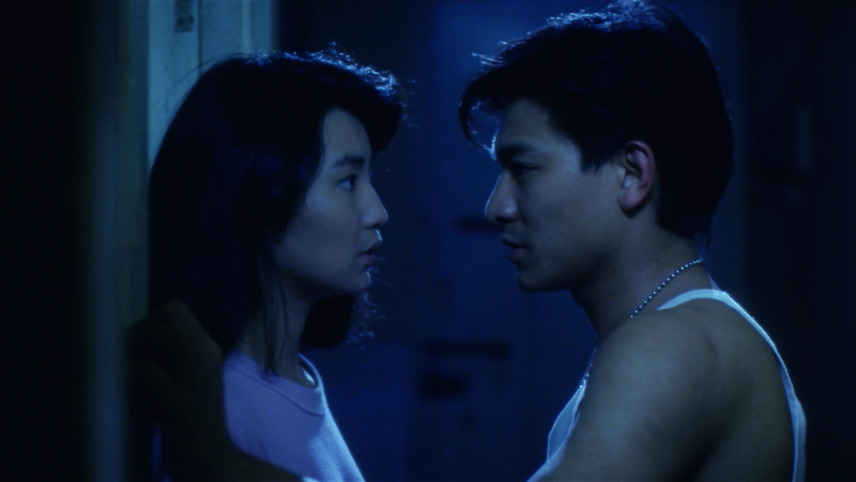
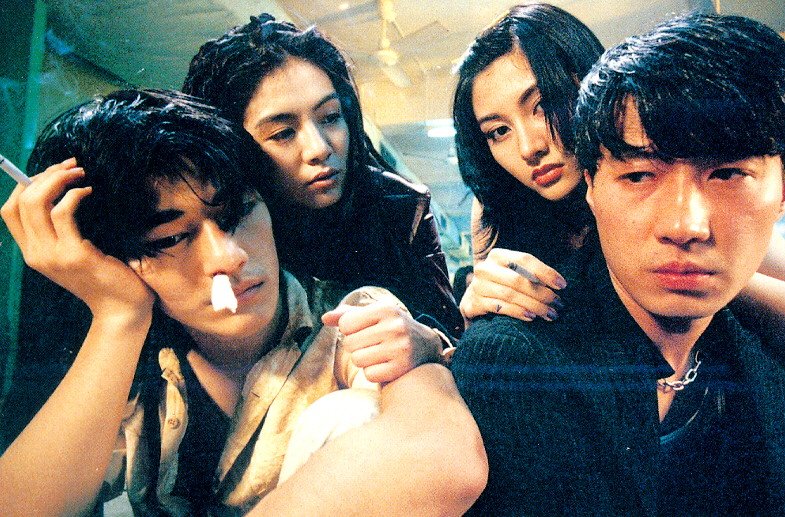
1. As Tears Go By (1989)
As Tears Go By (1989)
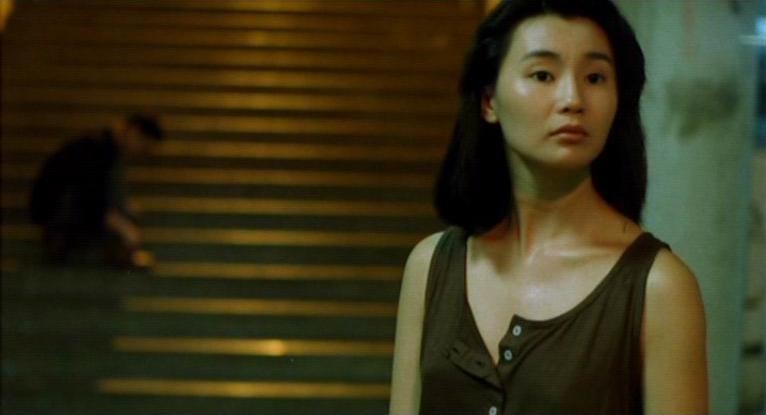
This feature-length directorial debut establishes many of what would become Wong Kar-wai’s trademarks, both thematically and aesthetically. The film marks the first collaboration between the director and Hong Kong actress Maggie Cheung. As Tears Go By tells the story of a young Hong Kong underground up-and-comer who is torn between loyalty and love. The disturbance of his shy cousin appearing in his life sparks the conflict between past and present.
Until this moment the protagonist’s life is unchanging, unexamined. His cousin becomes the object of his longing, representative of a future he had never before considered. As the protagonist is drawn toward this newly realized future, he is inevitably pulled back by his violent past; gang loyalties and a sense of responsibility force him to depart from his idyllic future back to the Hong Kong underground.
The geographical and temporal displacement of Wong’s characters are significant features of his cinema: characters frequently travel back and forth between places on the simplest of whims. However, these efforts to confront their spatial and temporal separations are often in vain. Even when the protagonist realizes his potential for happiness, his link to the past perpetually anchors him in the present, unable to move on. The character’s awareness of this connection is what decidedly seals his fate.
as tears go by 2
Wong Kar-wai’s aesthetic predilections are apparent from this debut. In the opening scene, the main character is woken by his aunt calling, and she tells him that she’ll call back later. However, only two cuts and seven seconds separate the now from later; with little changing aesthetically this is a jarring non-representation of time. This is director Wong Kar-wai preparing the audience for the tenuity of chronology in this film, and in his work to come.
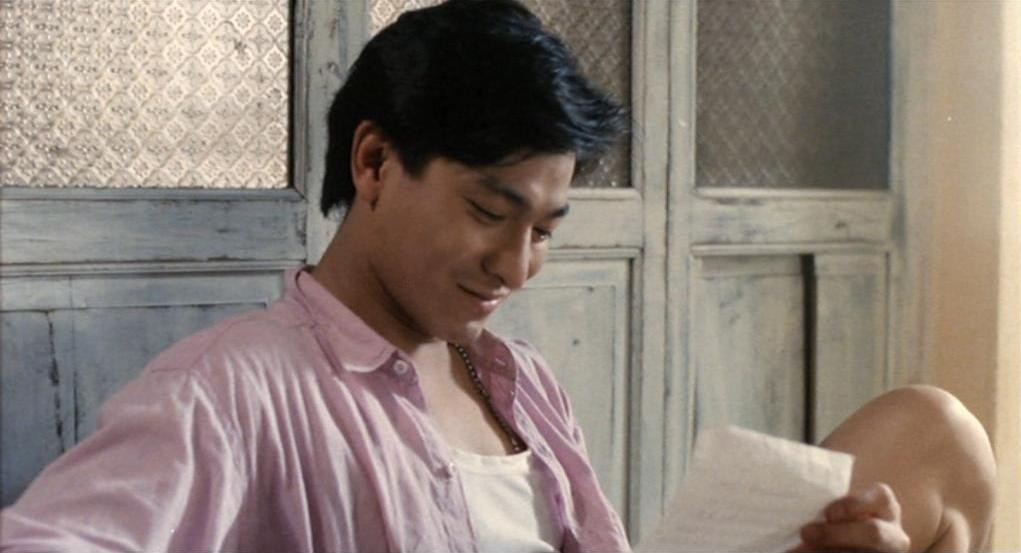
At the end of the first act the protagonist’s emptiness and longing are realized in a moment which uses a trademark Wong Kar-wai device, voiceover. In this case, it is the cousin who has now departed for home reading the letter she has written to her cousin. Images of the main character reading the letter are cross-cut with images of his empty apartment, his cousin traveling home, and the landscape. This is a frequent device of Wong’s to convey the poetics and mechanical processes of memory, nostalgia, and self-reflection.
as tears go by 3
Wong’s conceptions of time transcend narrative into the actual means of production, such as his manipulation of film speed. In a process which Wong would later perfect with cinematographer and frequent collaborator Christopher Doyle, the images are shot at a low frame rate and then step-processed at an even slower rate onto the finished film stock to restore the action to its real time length.
The resulting images are confounding, neither slow- nor fast-motion, but something altogether separate from real-time. They are distorted, jerking forward, blurring lights and colors across frames. Not to be confused with the ethereal, these images are dreamlike in a more jarring way. In As Tears Go By, Wong uses this technique to create a internalized depiction of violence and vengeance. It is an ultra-personal scene which reveals the depths of the main character’s loyalty. The process is used again at the end of the film in a similarly poetic way, as if to comment on the inevitably of the main character’s fate.
As Tears Go By is Wong Kar-wai’s first and most straightforward feature-length film. Despite its linearity and narrative cohesion, it is only the jumping-off point for his explorations of time, place, love, and longing.

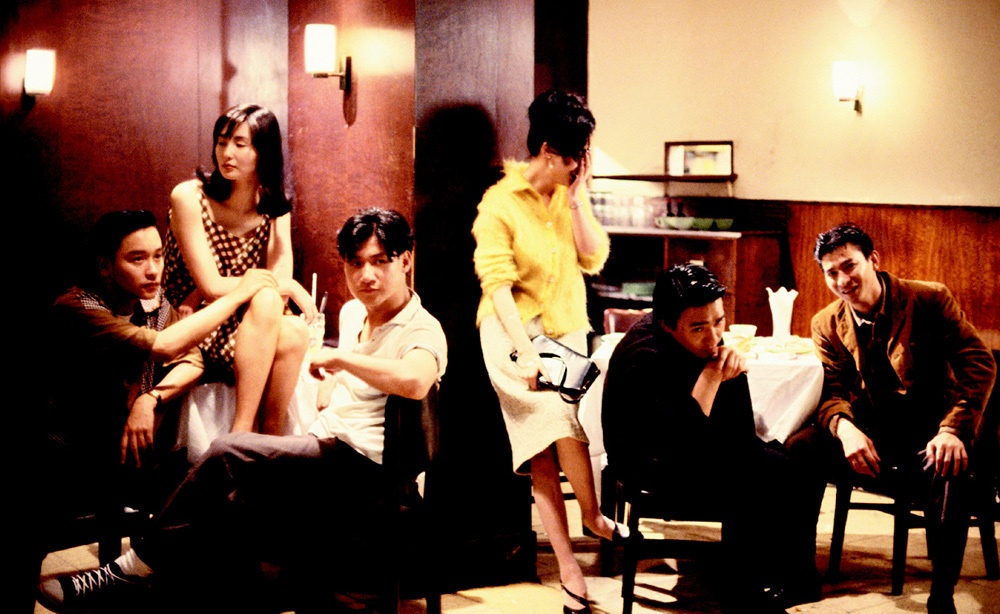
2. Days of Being Wild (1990)
days of being wild 2
If Wong Kar-wai’s feature-length debut presented the themes he would go on to explore with an almost-obsessive rigor, then his second film established him as an authentic voice in the unfathomable landscapes of human suffering. Set in a poignantly rendered 1960s Hong Kong, Days of Being Wild, as the title suggests, is about the search for intimate connection, a quest for a sense of identity and purpose, and the consequences of reckless love.
The film popularized a genre of Hong Kong films known for its art-house aesthetic, relying on the ability of actors to sustain the emotional arcs of their characters through the mundane aspects of daily life rather than a strict adherence to plot. The film marks the first collaboration between Wong Kar-wai and cinematographer Christopher Doyle, and examples such trademarks as heavily saturated and mixed lighting sources, the manipulation of film speed, and images otherwise distorted via focal length, filtration, camera movement, etc.
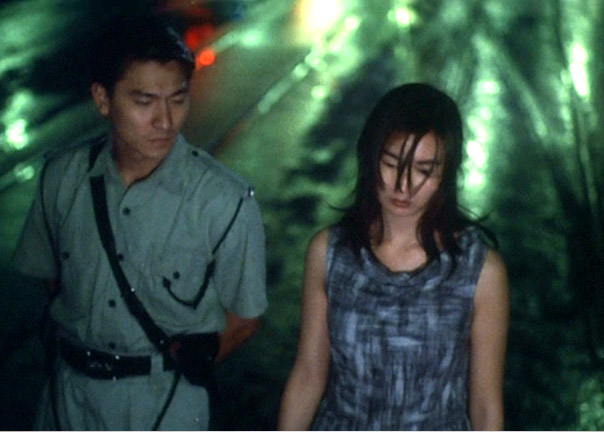
The three main cast from Wong’s debut return: Maggie Cheung stars as Su Li Zhen, a young snack shop worker jilted by a handsome heartbreaker, while Jacky Cheung resumes his role as an emotionally-charged sidekick, and Tears star Andy Lau takes up the quiet role of a lonely night patrolman. Aside from working with the best actors and actresses of Hong Kong cinema, Wong’s casting also serve a thematic purpose.
Past collaborators return in similar – sometimes nearly-identical – roles, a commentary on the nature of identity and memory. His characters, removed from all temporal and geographical context, are perpetually longing, always searching for fulfillment and purpose. Days of Being Wild also constitutes the first entry into a thinly-veiled trilogy continued ten years later in In the Mood for Love (2000) and still further in 2046 (2004) – to say that Wong Kar-wai ever concludes this story would be athematic.
days of being wild 1
Days of Being Wild offers none of the however-slight conclusion at the end of Tears. It is Wong’s first decided step in the restless journey for self-discovery and permanence. A handful of characters are presented in their daily lives, seen alone at work or home, colored by their private thoughts and feelings about time, being, and belonging. The heart of the film is how people deal with rejection: the women are discarded by the same man and in the same manner, but deal with their pain in different ways.
The man himself deals with an even more private conflict, inconsistent feelings about his former-prostitute adoptive mother, and the absence of his biological mother, a Filipino aristocrat. The film crosses borders in both time and space, portraying the inner as well as literal journeys of the characters. In this way equal weight and emotional depth is given to the jilted lovers, the womanizer, his candid and self-effacing sidekick, and a solitary policeman.
In Days of Being Wild, Wong introduces his evocative disruptions of plot, wherein an presumably minor character is shifted to the foreground. Here, this is accomplished through voice-over; the night patrolman, his romantic love having never materialized, leaves Hong Kong to realize his dream of becoming a sailor abroad.
However, this departure remains within Wong’s realm of unremitting longing: the former-policeman now-sailor meets the young philanderer in the Philippines, on his own unfulfilled search for his biological mother. This is the beginning of Wong’s contemplation on chance, fate, and free will, which will remain at the center of his subsequent works.
days of being wild 3
Here, all love is unrealized and insignificant. Each of the rejected women are sought by other men on the periphery, whom they either use, ignore, or otherwise fail to accept in turn. Plot-wise, little happens as these characters haphazardly navigate their daily lives and spend their time in wait, unaware that opportunity has passed them by.
They are all victims of time, change, and issues of identity and belonging in Wong Kar-wai’s 1960s Hong Kong. However, in the final scene, there is the suggestion of an enduring human spirit. At once troublesome and evocative, the end of the film sees the minor character played by Tony Leung – who will star in In the Mood for Love and 2046 – getting ready for a night on the town, and departing his cramped room.
After testing the waters with Tears, Days of Being Wild jumps on in to the boundless oceans of inexpressible sufferings. In his second film, Wong eschews plot and fully follows the emotional whims of his characters with utmost faith in their integrity. Wong’s approach is nonjudgemental, as there is no good and bad in the longing for intimacy and connection, self-knowledge and substance. There is only individual’s journey, and the unfortunate consequences as we recklessly grasp at fulfillment.

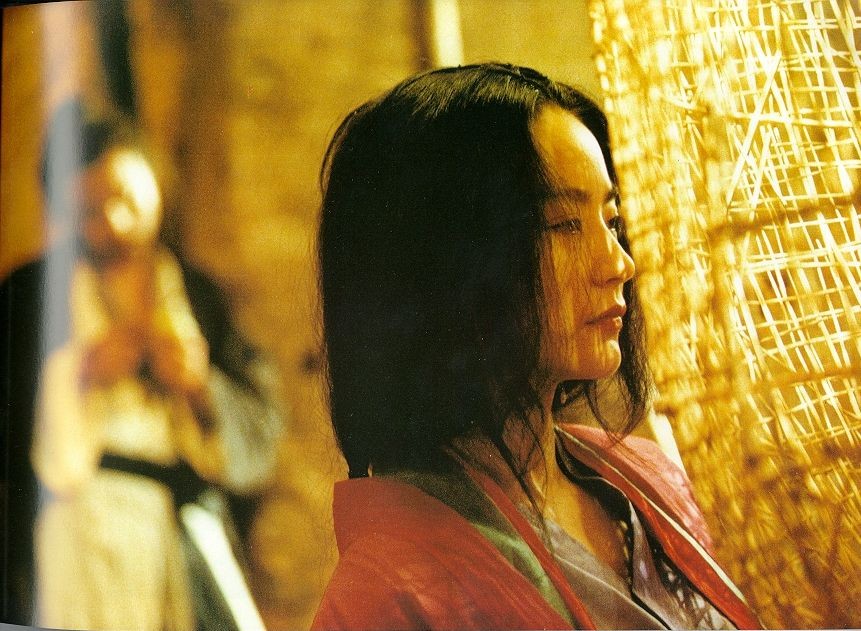
3. Ashes of Time (1994)
ashes of time
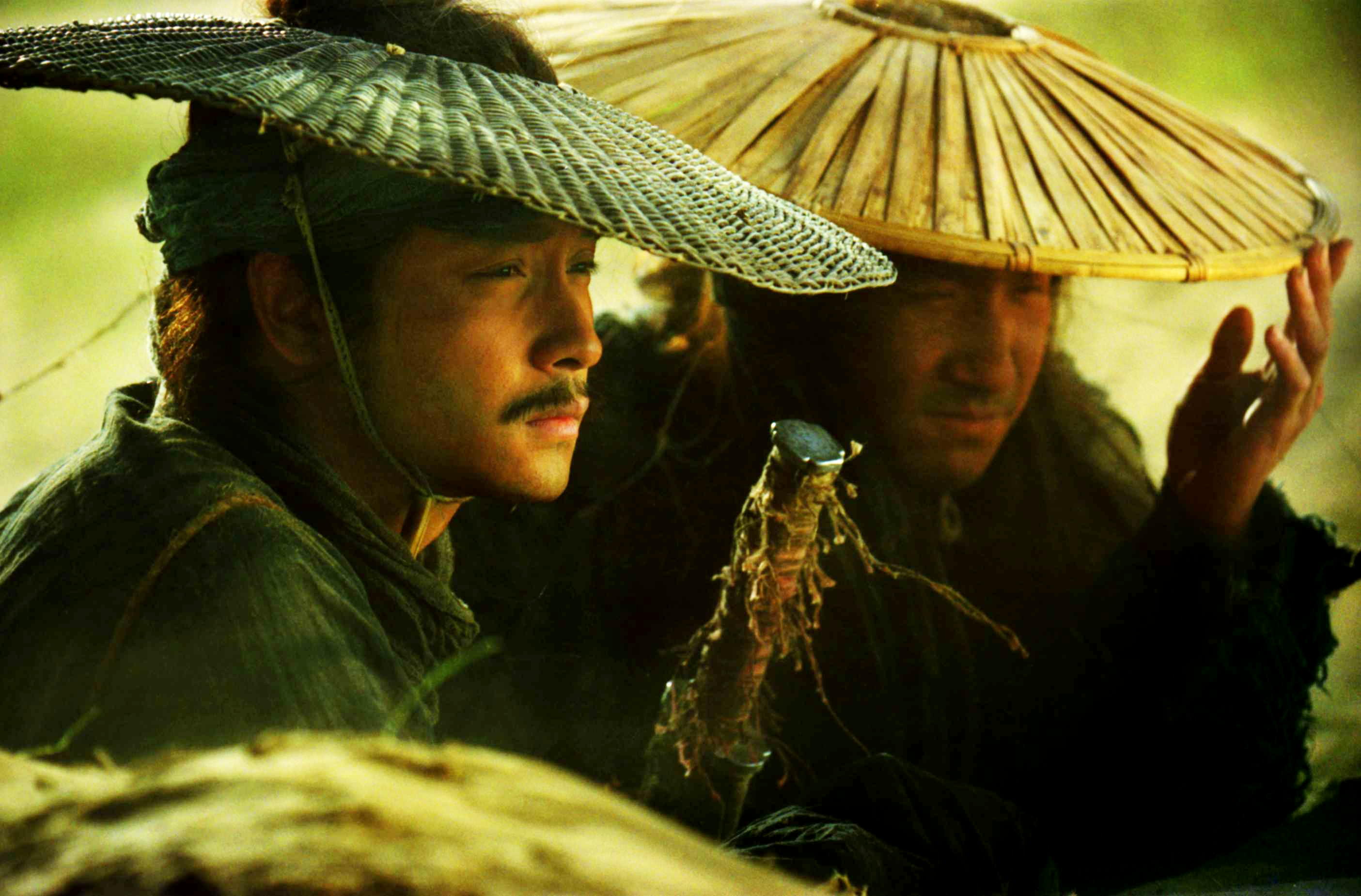
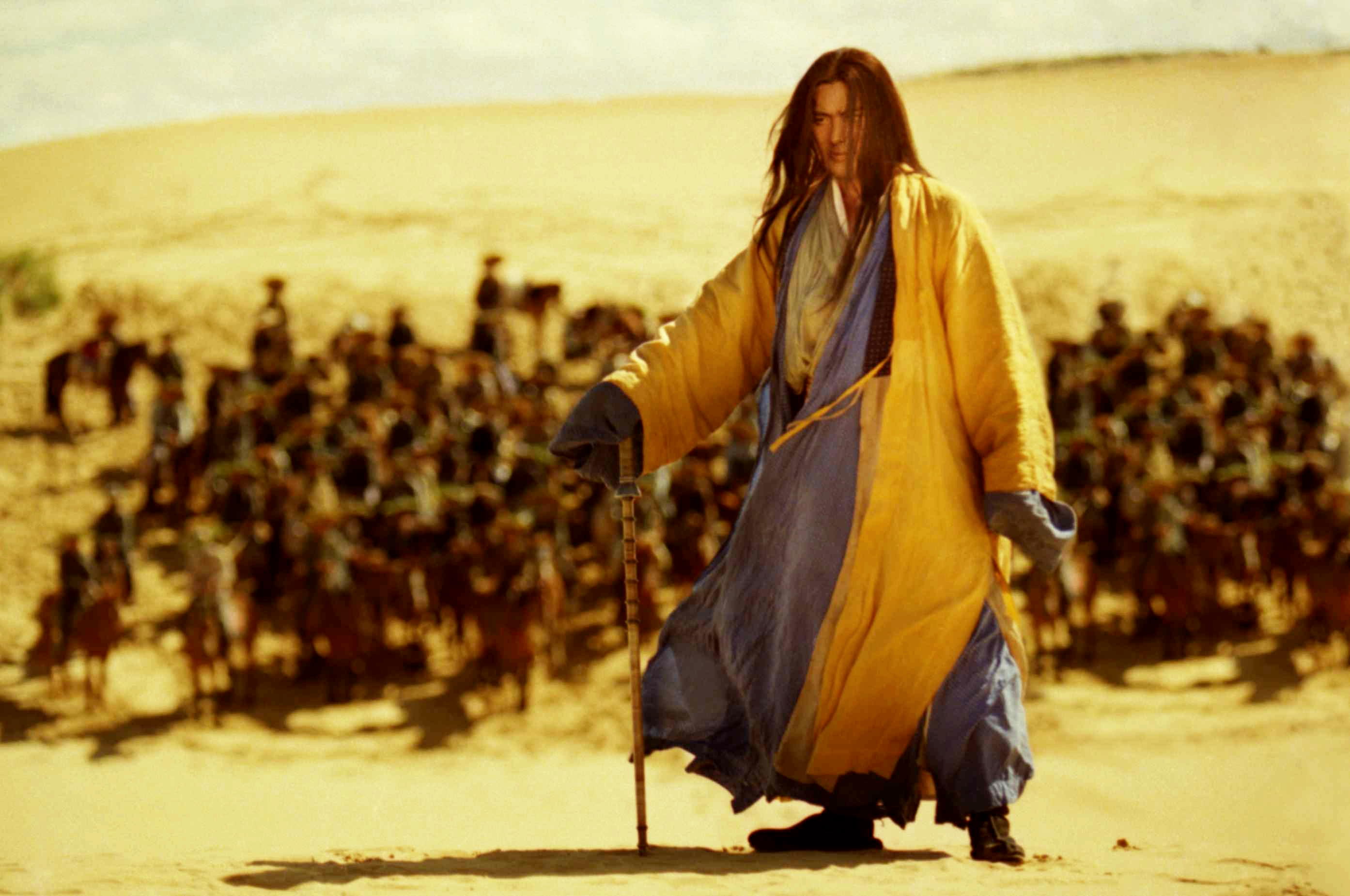
Ashes of Time presents as Wong Kar-wai’s perhaps most challenging film to date. It lacks the context and specificity of the Hong Kong settings in his other films, where any outside travel serves as a punctuation in the narrative. Instead, Ashes tells the story of an agent by the name of Ouyang Feng, and the several bounty hunters he hires. The film is technically an adaptation of the novel The Legend of the Condor Heroes by Jin Yong. However, Wong only uses the novel to loosely base his film on four of the characters, throwing out all plot adaptation. The result is a film that, despite its departures, is very much of the director’s spirit.
Ashes is a mood piece of a film. The story spans years, however, the characters are never removed from the deserts of Ancient China and there are no other indicators of chronology. The desert is an entrapment for all of the characters – a place of uncompromising necessity and self-sufficiency. Human beings are reduced to the most primal modes of survival.
Through the main character, Feng, Wong explores the cyclic nature of betrayal. A character who makes his living by convincing others that, surely, there must be someone they want killed, is from the very start both a victim and perpetrator of this corrosive force. As it turns out, Feng’s contempt for human life stems from a very intimate betrayal in his past.
ashes_of_time_redux07
Blindness in various forms appears throughout Ashes as both a consequence and a saving grace from this vicious cycle. There is the blind swordsman, who wants to make the most of his remaining vision while he still has it; the swordsman who practices against his reflection; the blindness to the consequences of actions. A wine which has the power to make a person forget his past is seen throughout, as one of the characters offers that, “Man’s biggest problem is that he remembers,” or else, every day could be a new beginning.
However, some people refuse this form of blindness, a gesture symbolic of the unwillingness to forget past betrayals and driving pains. These malignant forces have become their only form of sustenance in the desert. Each character, at least initially, acts in spite of others, a rejection or reproach for human decency. A consequence of betrayals, it is better to hurt than to be hurt.
However, many of the characters find their way out of this blindness, either through love or some act of humanity. In the end, there is redemption from this such spiritual deprivation and isolation. The desert becomes a symbol of self-exile, in which character come to reflect upon how their life choices have led them to where they are, physically and metaphorically.
Ashes of Time purports to be a story about vengeance, but as that cycle has no end, the film must have a more decisive meaning. Ultimately, then, the film is about how one comes to terms with his or her burdens, and closes the gaps of the past. It is about the perspective with which that individual looks forward. As one character wonders what could beyond the distant mountains, another answers, “another desert.”
ashes_of_time_redux
Feng’s refusal to look into a different future is his ultimate failure; he condemns himself to the desert. He longs for the past, the opportunities, mistakes, and regrets gone by. This is the greatest connection Ashes establishes to the rest of Wong’s body of work. However, where Wong’s other films deal with these themes in modern settings in which characters sit idly by and dwell on the past through their daily activities, Ashes is much more understated in its presentation.
The desert setting demands survival; it fosters a preoccupation with actions, and illusions. While people in contemporary Hong Kong are free to fully embrace their emotions behind closed doors, the deserts of Ancient China manifests mirages of necessity, a blindness toward one’s inner life.
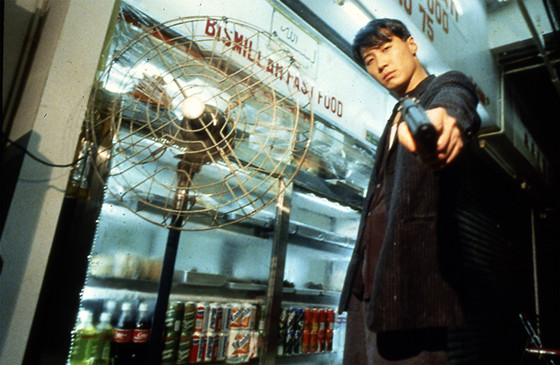
4. Chungking Express (1994)
chungking express
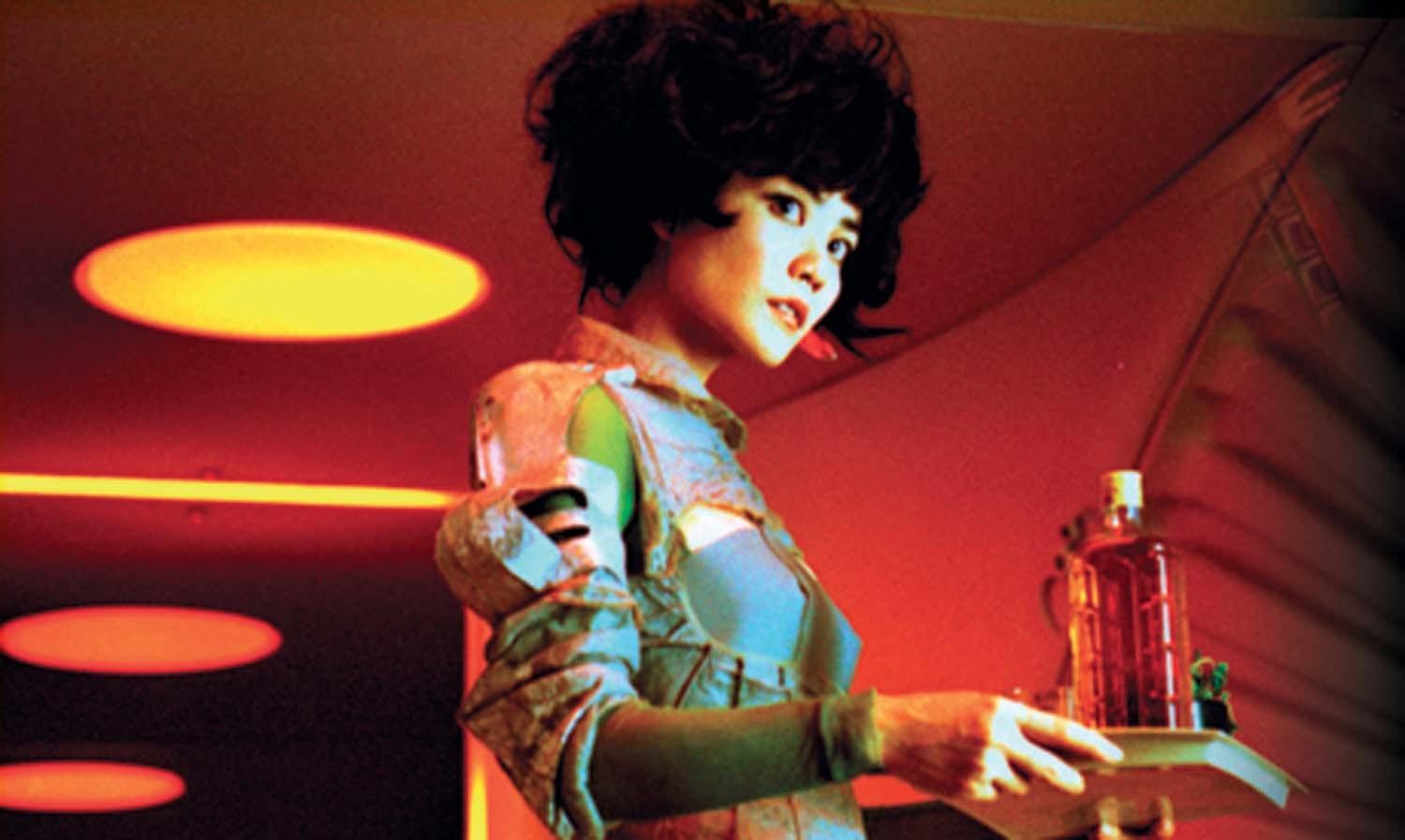
Filmed during a two-month break from editing Ashes, Chungking Express deals with similar themes in a relatively more lighthearted, contemporary story. The film is divide into two parts, each concerning a lovesick policeman who is getting over a breakup. Each story has little to do with the other except for a brief intersection where the first ends and the second begins. The film juxtaposes a densely populated Hong Kong with the isolated inner worlds of characters’ memories and nostalgia.
This paradox materializes through Wong’s frenetic handheld camera, deeply saturated florescent light, a restless editing pace, and a contemporary-pop soundtrack. Hong Kong is rendered in all of its modernity, while at the same time externalizing the emotional confusion of characters. Here, the director once again draws attention to the underlying connection between people and their time and place, depicting the private lives and relationships of individuals as results of their culture.
In fact, the English title “Chungking Express” is a collision of the films settings, the Chungking Mansions and Midnight Express food stall, and all of their physical and symbolic import.
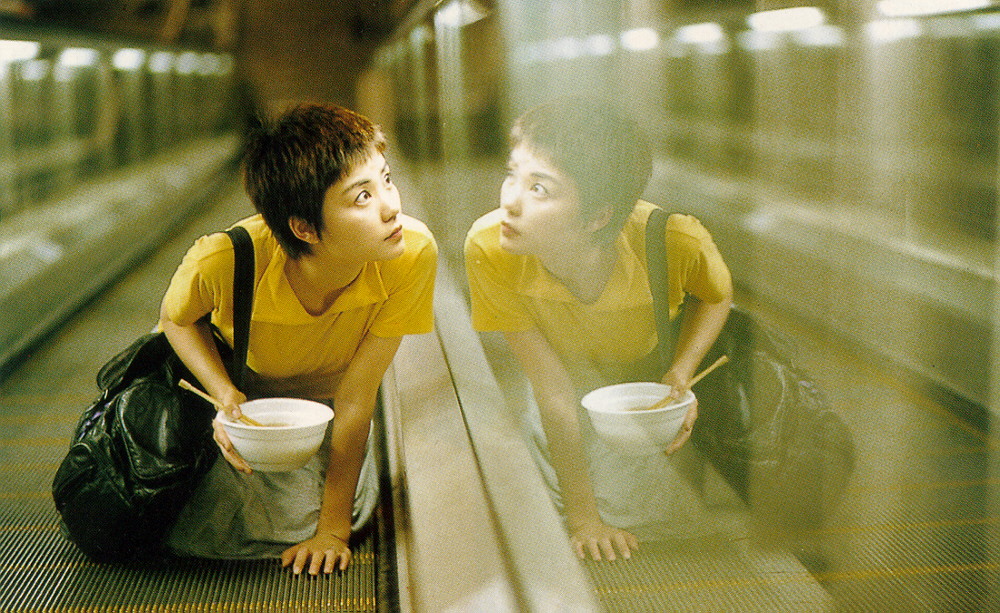
If the first story is about unconsummated love, then the second is about unmaterialized love. In the second story, Faye, the snack shop girl, longs for Cop 663 from afar, even as he dwells on his ex-girlfriend. While He Qiwu and the drug smuggler are unrelated until they are brought together by their shared misfortune near the end of the first story, 663 and Faye are in constant physical proximity.
In scenes where 663 waits in the snack shop, Faye dances around to her favorite music and steals glances at him; when he catches her they share only a few words here and there. During the days, she breaks into his apartment and cleans the spaces in which he relives memories of his flight attendant girlfriend. The romanticism with which Wong manifests these memories is pure nostalgia. A free floating camera breathes in the steamy air of the couple on a hot afternoon, and 663 narrates these memories with the hindsight of his dashed dreams.
Chungking-express
Love is ever-elusive in a world where no one is quite ready to act on their emotions when opportunity presents itself. When 663 and Faye eventually entertain the possibility of each other, Faye flees, repressing her feelings for fear of losing her freedom. This itself is a paradox that is continually explored in Wong’s work: the potential for joy in self-sacrifice, a whole that is greater than the sum of its parts. In a sense this the director’s caution to his audience, to make oneself as emotionally available as humanly possible.
Despite this, the second story and its conclusion is considerably more elevating than the first. Even with its poignant commentary on the tenuity of relationships and possibility, the second story offers a sense of balance in this troubling reality. The first story only leaves the viewer with a sense of what could have been – the characters of policeman and drug smuggler merely dramatize their failure to connect. However, here, too, the director offers an emerging insight, that sometimes a camaraderie between lost souls can be enough.
Common in Wong’s work, plot coherence is not a concern of the film. The narrative takes unannounced leaps in perspective and – as seen in Days – seemingly unrelated characters are given equal attention. Rest assured, even characters who never meet in Wong’s films are connected; thematic and emotional ties run through all examined lives. However, this approach to narrative can be troublesome for viewers.
Wong’s unconventional and expressionistic treatment can be hard to follow, but the symbolism and subtlety of poetic gestures lend a poignant gravity to the film as a whole – expiration dates, cans of pineapple, the preoccupation with “freshness.” Wong’s sympathies for the private and romantic are not found in carefully drawn plot points, but in small acts of personal significance, the gesture of a boarding pass drawn on a napkin or a spare glass hidden away until it’s needed (As Tears Go By).
chungking express 2
The director traverses the most sensitive terrain of human needs and desires as a poet, through imagery and sound, the juxtaposition of the inner and outer, and utterly expressionistic flourishes of humanity. Chungking Express is perhaps the most seminal of Wong’s early films. While Ashes presents a profoundly elliptical narrative, it is Chungking Express that captures the true essence of intimate lives in modern Hong Kong. It is the very timeliness of this work – and those to follow – that establishes Wong Kar-wai as a voice of eternal human longing, at once nostalgic and prescient, but always of the moment.

5. Fallen Angels (1995)
fallen angels 2
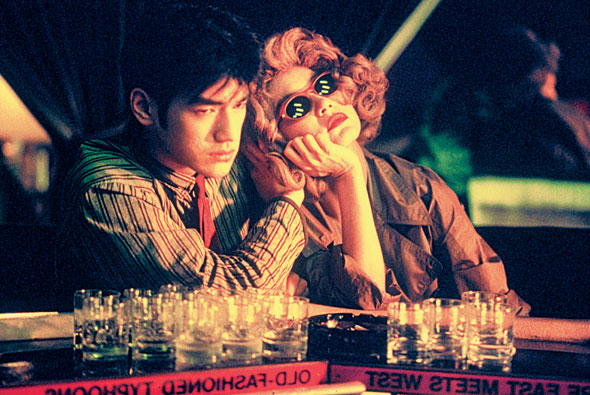
Fallen Angels can be assessed as a companion piece to Chungking Express – the same settings, aesthetics, and themes abound. Like Chungking Express, Angels presents two stories that have little to do with one each other besides a few chance encounters between the characters.
The first story concerns a hit man and a woman referred to as his “partner.” The two rarely rarely interact, but the woman cleans up his apartment and sends him the information for his hits. The second story concerns a delinquent young man, Ho Chi Moo, who has escaped prison and lives with his father. The woman from the first story happens to live in their building.
As extensions of Chungking Express, both of these stories deal with the existential implications of modern life in Hong Kong, i.e. alienation and loneliness despite the dense physical proximity of people. This conflict is reinforced by the spatial relations that Wong establishes; locations are revisited, characters seems to just miss each other, in passing, unaware of the camaraderie in their feelings, so to speak.
The result is an overwhelming repression of needs and desires. Wong’s characters are not ignorant of their feelings but their trouble is that they do not express themselves. This manifests as violence or a mentality of fatalism, emotional volatility masquerading as nihilism.
The hit man in the first story embodies this repression. In voice-over, he explains that one’s career is intrinsically linked to one’s personality: as a contract killer, he doesn’t have to make any decisions; someone else decides who should be killed, when and where. He is effectively removed from his profession. Murder distorts time; when he does his hits multiple juxtaposed camera angles refract and repeat the violence, gunshots fall out of sync, and the man’s affect is cold, removed. The repression of characters’ innermost feelings creates this metaphysical gravity, a distortion of time and space.
fallen angels
This is most effective in moments with the hit man’s partner. She is perhaps the most alone of all the characters in the film, and this loneliness often manifests in heavily distorted aesthetic choices. In an early scene where the woman is in the bar where the hit man often hangs out, images of glowing orange liquid coursing through the jukebox induce an almost hypnotic state.
Together with the musical choice (“Speak My Language” by Laurie Anderson), the effect is haunting as the woman daydreams about the man. Her longing and desire bubble beneath the surface before Wong cuts to the swirling neon-washed Hong Kong night, and finally the woman’s repression culminating – temporarily – as she masturbates in the man’s bed.
Early on in the film, the hit man briefly meditates on the nature of strangers, precluding his run in with various characters who will effect his life in various ways. It also becomes a contemplation on identity when strangers are mistaken for characters of one’s past. The willingness of an eccentric prostitute to accept the hit man as her ex-boyfriend becomes something of a revelation for him.
Upon recognizing such emotional vulnerability, he enacts to effectively make a decision in his life. Seeing into the sufferings of another person, in essence, allows him to accept the responsibility for his complicated relationship with his partner. This realization that he must account for his actions comes too late for him, but it strikes Wong’s resonating thematic chord at the center of our modern lives.
The second story concerns Ho, the escaped convict, and his alienation as opposed to the fatality in the first story. A mute who lives with his father, Ho spends much of his time in hiding and goes out at night to reopen shops and sell their goods to unwilling customers. When night after night he runs into Charlie, who is trying to get over her ex-boyfriend, his life is changed forever as he experiences a fulfilling love.
There is a suggestion that the girl’s ex was stolen from her by the same prostitute that the hit man spends time with, and thus he is the man she is trying to get over. This intangible connection between characters is a trademark of Wong’s work; people who never meet – or the audience never sees – are related to others in subtle and often romantic ways.
fallen angels 3
Even in Charlie’s company, Ho is alienated, as he is never the focus of her attention. He accepts his position as he falls in love with her, but he is ultimately forgotten. He escapes a physical isolation into another, deeper kind. His strange, forced interactions with people in the middle of the night are his only form of human contact. These incidences are always comical rather than threatening; his “customers” are sympathetic rather than frightened.
There is a lightheartedness to these scenes, a sense of brevity and innocence. However, Ho, too, eventually must take responsibility for his actions, as the hit man learns, but this revelation is no means of a payoff in terms of any kind of fulfillment.
Wong’s characters learn about themselves through their experiences – issues of identity being the crux of all human isolation and longing – but this in no way guarantees genre expectations. In Wong’s films, the revelation of the individual is often inconsequential, sometimes fatal, but the emphasis remains on the individual. The troubled relationships between characters all return to the broken identities that make them up.
Wong’s preoccupations with time, memory, and nostalgia enact both a transient and an eternal quality at the same time. Wong insists that one’s identity – and the tragedy of the human condition – is understood through such sufferings of the soul. By experiencing loss, regret, and reflection, we are intimately acquainted with the very transience that gives weight to our humanity.

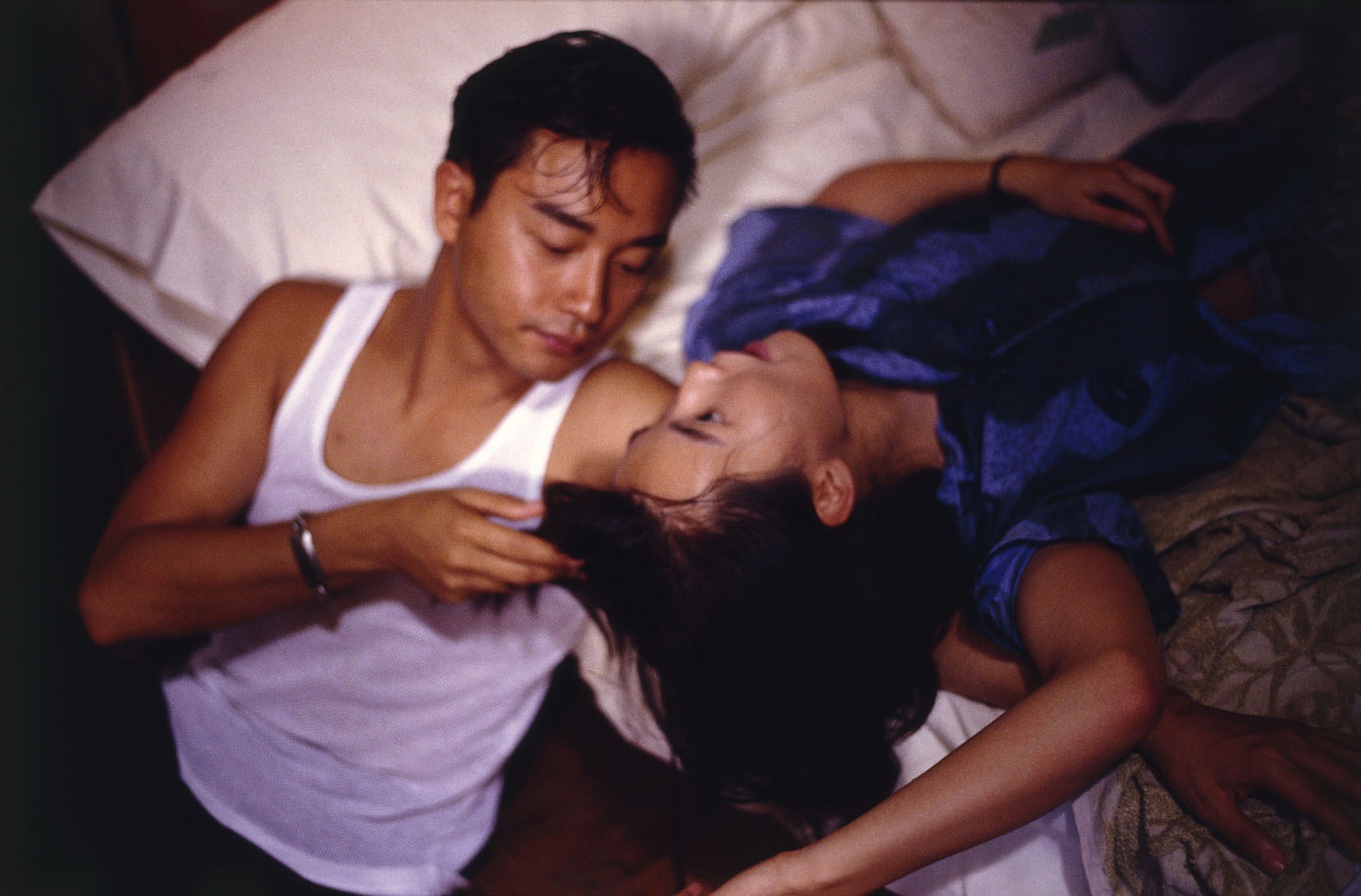
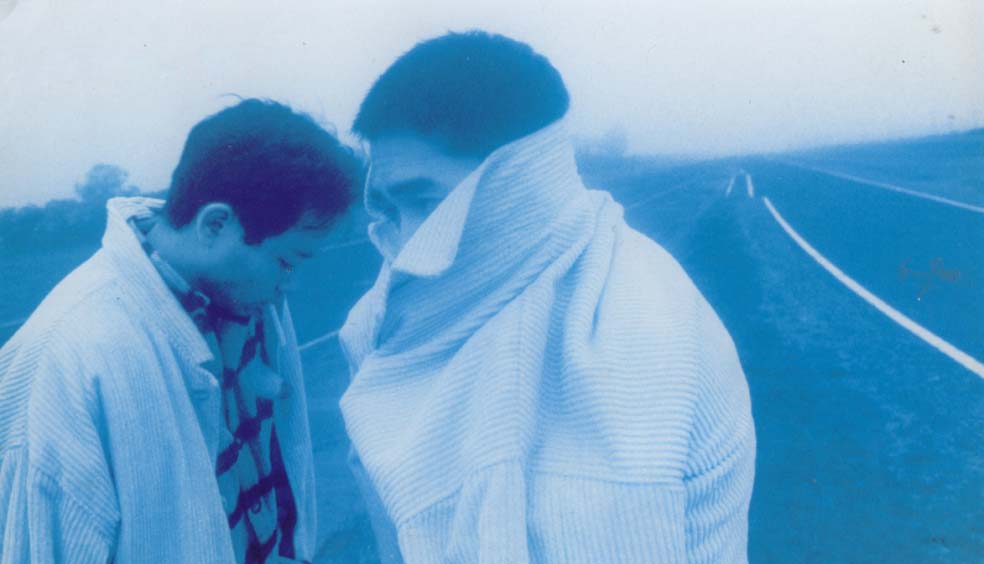
6. Happy Together (1997)
happy together
This film marks one of Wong Kar Wai’s most cohesive works, in terms of both his aesthetics and thematic intent. Led by such opposing forces as Leslie Cheung and Tony Leung, Happy Together tells the story of two lovers caught in an abusive cycle of destruction and dependency. Cheung reprises a role similar to his character in Days of Being Wild, an uncommitted and emotionally vapid lover, Ho, while Lai, played by Leung, is prey to his endless promises of starting over.
Common in Wong’s work, the film begins with a character speaking in past tense via voiceover, contemplating the consequences of actions yet to happen. More than in any other of his films, Wong deals most directly with cycles and their effect on people here. The two men have traveled to Argentina in an attempt to renew their relationship, but before long Ho leaves Lai again. Wong makes exceedingly drastic aesthetic choices to visualize Lai’s emotional chaos as Ho emotionally tortures Lai.
An unpredictably shaky camera searches for its bearings, music selections pop into moments of fitting, and garish neon light soak the walls of interiors – a color palate that is at once putrid and beautiful. At this point, the usually detailed-oriented Wong is not so much concerned with legibility as he is with impressionism, capturing his character’s inner turmoil and turning it inside out.
happy together 3
As Wong would have it, Ho shows up at Lai’s door beaten to a pulp and in need of care. Lai takes him in, but keeps him at a distance both physically and emotionally, despite Ho’s advances. Eventually, though, Lai relents. Lai remarks in voiceover that this was the happiest he’d ever been, despite his awareness that Ho’s affection is contingent upon his dependence.
This is thematically significant as a key to understanding Wong’s work as a whole. Dramatic “logic” – as one would assume – is thrown to the wayside to instead focus on the director’s true interests; despite awareness and logic, Lai cannot leave Ho because he is entrenched in the most eternal conflict: an individual in the face of faltering ideals. Of course, there is the physical conflict of isolation in a foreign place, Lai as an expatriate in Argentina with no immediate means of getting home, but this is a relatively simple narrative concession granted which helps to reinforce the singularity of his true conflict.
Wong assures this reading through the leitmotif of the Iguazu waterfalls, the initial reason for Lai and Ho’s trip to Argentina. In these images, the camera floats over the falls just long enough to induce meditation, and then they’re gone. This location is attributed symbolic significance, another trademark of Wong’s work; as some places become significant based on what occurs there, the falls represent an unrealized potential, a looming ideal that has since lost its perceived meaning.
happy together 2
The director confronts cyclical human nature most directly through Lai’s final rejection of Ho. Lai is unsurprised by Ho’s abusive behavior when he recovers, but his sadness transforms into dignified anger and a commitment to his own emotional well-being. Lai is ultimately able to reject Ho and realizes through friendship that his relationship with Ho is an ideal which cannot exist.
However, even his friendship must end, and at his lowest Lai comes to finally understand Ho. Again, Wong’s characters’ resolve come from experiences of considerable emotional depth. From his shattering ideal of love, to his redeeming friendship, and then his complete alienation, Lai is able to gather the pieces of his identity and confront his past.
In this film, Wong effectively closes off the cycles that he sets in motion, or rather, realizes his characters trapped within. Naturally, there are loose ends, but Happy Together feels like the director’s most cohesive work up to this point. Here, he seems to have stuck a balance between his narrative predilections and thematic intent.
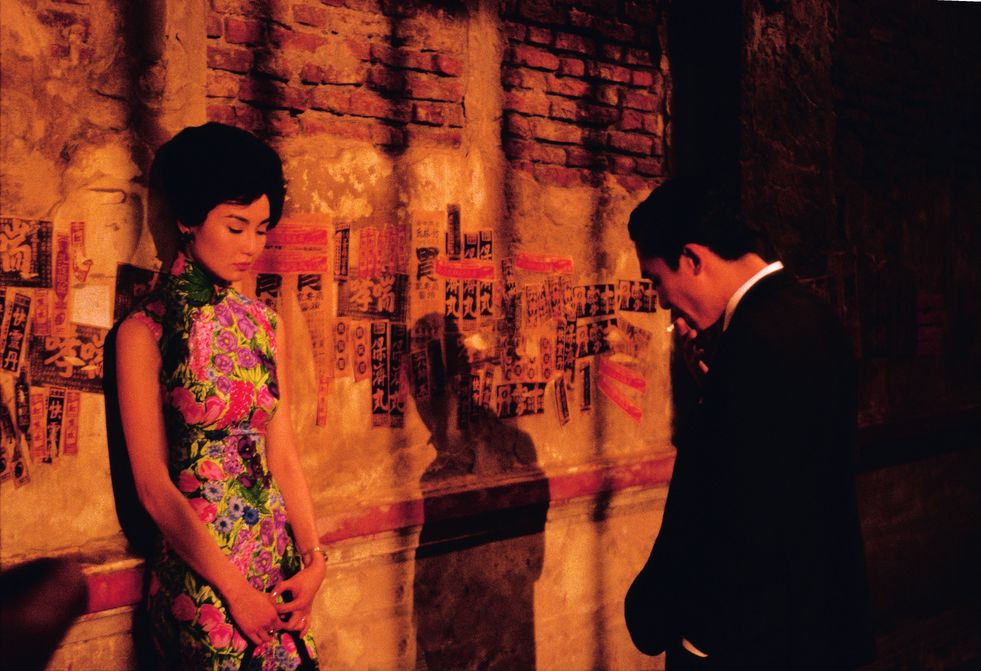
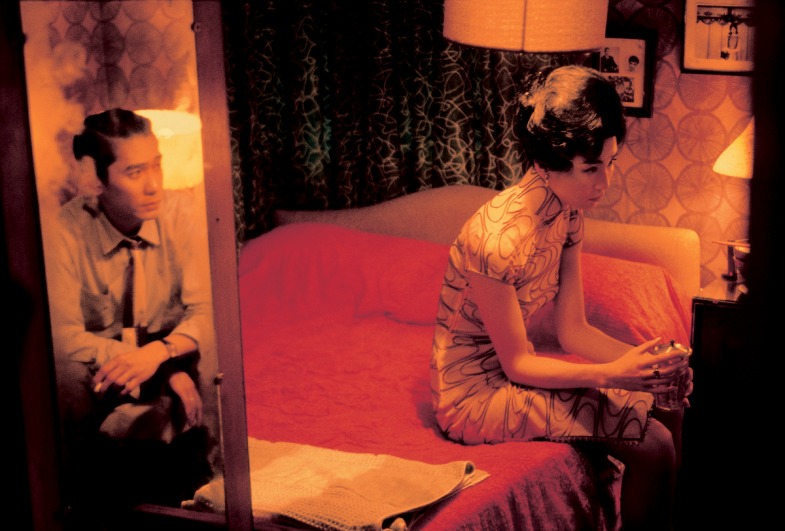
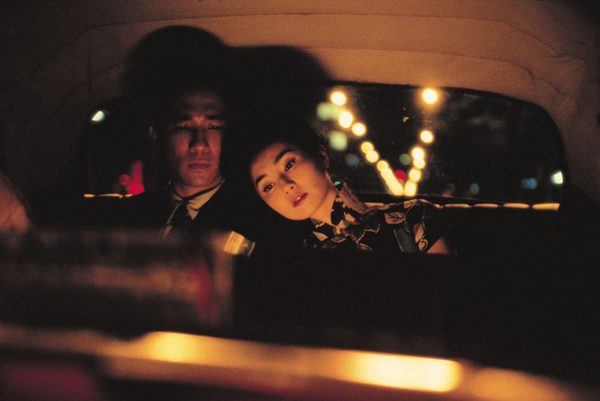
7. In the Mood for Love (2000)
in_the_mood_for_love
Widely regarded as Wong Kar-wai’s masterwork at this point in his career, In the Mood for Love constitutes the second entry into his informal trilogy (Days of Being Wild, 2046). Set in 1960s Hong Kong, this film bears all the marks of Wong’s Romantic vision –– isolation in densely populated areas, longing for intimacy and fulfillment circumscribed by social forces, an urban setting which at once exudes nostalgia and modernity. At the forefront are Su Li-zhen and Chow Mo-wan, played by Maggie Cheung and Tony Leung, respectively. This film, and those aforementioned, create a story of boundless emotion and eternal longing which supersedes any narrative discrepancies.
On the same day, Su and Chow both move into an apartment building and become neighbors. Each of them has a spouse who frequently leaves them alone to work late, and despite the friendly landlady, Mrs. Suen, they each find themselves alone, confined within the thin walls of their apartments. Wong capitalizes on motif, allowing locations and actions to take on meaning through repetition, nuance, and subtle changes.
Everyday interactions and chance encounters defy common romantic genre expectations. The characters’ lives intersect to no avail; Su and Chow frequently cross paths on their way to and from the street noodle stall, exchanging silent greetings and continuing along. Rather than linger on these encounters, Wong instead focuses on the characters separately, the banality of everyday unfulfillment. This conceit is, in fact, an outright declaration in the original Chinese title of the film, which refers to a metaphor for the fleeting nature of time, beauty, and love. It is a longing which permeates the core of the characters’ souls.
In The Mood For Love
The inevitability of the characters’ union is set into motion by their shared realization that their respective spouses are seeing each other. Even from the start, this bonds Su and Chow together in a plainly platonic sense, thus their relationship begins. And their relationship is innocent in that Chow asks Su to help him write a martial arts serial for the paper he works for. However, in the social context of the times, even this solicits speculation, so Chow rents a hotel room where they can work in secret.
The two seemingly trade their isolated apartments for a rented room and begin to share meals together, a reversal of the earlier motif of separation. As their relationship develops they discover that they have feelings for each other, but their feelings never materialize as it is implied that they are morally above their spouses. This illustrates a conviction of Wong’s vision, that while the social norms and conflicts of modernity are hinderances upon human connection, issues of morality are ultimately held in opposition to fulfillment. It is the ever-present conflict between the daily life of the individual and the ideals he or she aspires to.
When Chow confronts his feelings and asks Su to leave with him, she fails to accept – a mere fault of chance, or an eternally departed potential. Even the attempt to reach out by one character ends in checking herself against doubt. The eventual transgression of the platonic boundary placed on their relationship is a direct consequence of their unrelieved repression. However, despite the acknowledgement of this gesture, their feelings still fail to materialize.
Emotions bubble beneath the surface until they demand expression, but the characters are always restrained by a fear of the same sense of emptiness that they presently suffer from. A pervading nostalgia harbors all missed opportunities, regret, and moral contemplations faced by the characters, continually leading them into conflict with the ideals they long after. The pattern of missed connections juxtaposed with physical proximity thus becomes another contemplation on chance and fate, a predetermined loneliness or the tenuity of fulfillment. Either way, lasting happiness is always just out of reach.
in the mood for love
At the end of the film, the director again creates a symbolic tension from a particularly meaningful location. Chow fulfills a prophecy made earlier in the film when he journeys to the Angkor Wat in Cambodia and whispers a secret into a wall and covers it. This is the repression at the core of Wong’s sensibilities as a director.
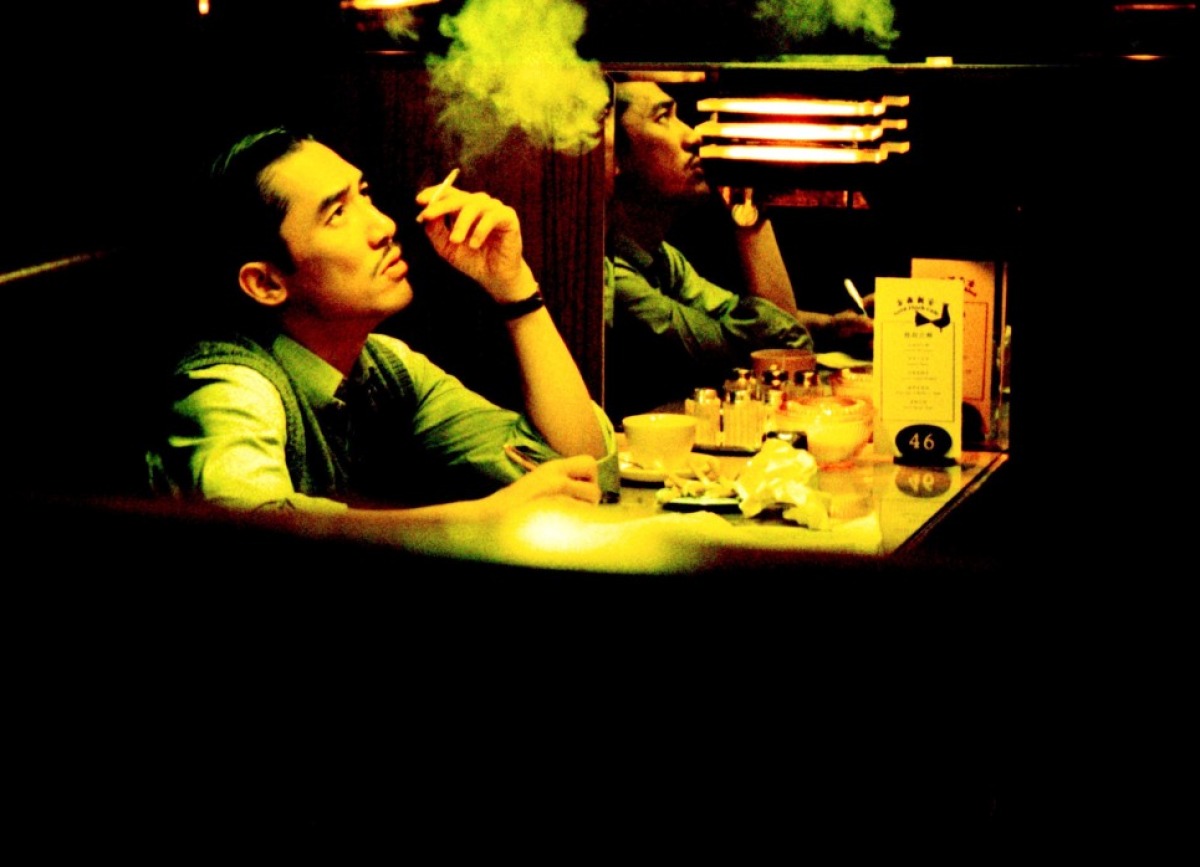
The ultimate inhibition of peoples’ emotional freedom and fulfillment is not social, not even moral, but it is the lack of self-understanding, and therefore the means to connect with others. Despite the influences of chance, fate, and free will, Su and Chow never allow their true emotions to bloom. What remains is a silent resignation, a memory, a secret of another life which may as well have been a dream.
In the Mood for Love is Wong Kar-wai’s most lyrical film to date. It is a film which seeks to portray the individual’s inner life through image and sound. Wong Kar-wai fully establishes his dominion over the traditional narrative. His refusal of such structures is not a rebellion against them, but a necessity of the material he serves. The exploration of such intimacy, repression, and longing depend not on plot developments but one’s experience of everyday life.
The director enlivens his characters’ surroundings with such beauty and poetry that their isolation is a natural contrast to the possibilities of life. With In the Mood for Love, Wong Kar-wai situates himself as one of cinema’s most contemporary Romantic tragedians.

8. 2046 (2004)
2046 1
The concluding chapter of Wong’s informal trilogy is by far the most complex. 2046 is comprised of four stories woven together without respect to any chronology. Three of the stories are about Chow’s (the role reprised by Tony Leung) relationships with other women after losing Su Li-Zhen. The fourth story takes place in Chow’s science-fiction fantasy, the titular “2046.”
The structure of the film inherently modulates the viewer’s experience to be something more akin to memory than its mere representation. In this film, Wong Kar-wai seamlessly merges form with function; one experiences this film individually, taking away whatever resonates most in its subtle progression of tones and moods. In this way, synopsis is of little value, and a single viewing does not suffice to gleam Wong’s delicate sensibilities here.
At the heart of the film is Chow’s conflict of getting over Su Li-Zhen while still longing for the ideal that she represents. Wong maintains thematic consistency from In the Mood for Love while still making 2046 thoroughly original. This is largely due to the infusion of science-fiction elements – which resound poignantly and without contrivances throughout the film – but also Wong’s sensitivity to tone.
Like its predecessor, this film deals with the repression of not only one’s emotions but of one’s identity. However, where In the Mood for Love probes the nature of loss, 2046 explores how one attempts to recover from it. In time, such depression callouses, and the director navigates the transition with unabashed humanity.
2046-2
Aesthetically, the film marks a deviation from Wong’s previous work. Rather than render his interiors in harsh florescent colors, the director opts for a cleaner look. Whereas his previous films saw characters bathed in whatever the ambient light, 2046 feels more balanced. Faithfully rendered skin tones pop from color-controlled sets, often charged with red-green, green-blue split-compliment palettes. Wong exceeds his own high standards of detail and meticulousness; every composition has a specific weight and impact, and visual symbols such as mirrors, windows, and other means of separation or looking-in abound.
One crucial moment shows Chow on the street outside of his office, looking through the window at a woman he has feelings for as she talks to her ex-boyfriend on the phone. He watches how happy she is as the neon lights reflect back at him in the window. This moment presents a critical revelation on the path to Chow’s recovery. Each shot throughout the film renegotiates the shifting relationships between characters. Overall, 2046 feels like Wong’s most controlled, visually assured film up to this point.
The structure of the film does present significant difficulty in terms of overall comprehensibility. The chapters of the film move seamlessly throughout time and space, as well as other dimensions of reality, with only the slightest hints to the true chronology of events. Chow philanders through his life after Su Li-Zhen, and the chapters of the film focus on his relationships with three particular women – while quite a few more are implied. After losing his idealized love, Chow busies himself in the role of the much desired ladies’ man, however, his eternalized longing is never actually hidden.
The films begins with an introduction to Chow’s fictional world of “2046,” narrated by his main character. The future is a vast and lonely place where individuals try to recapture their lost loves by taking a long train ride to the world of 2046 – where, supposedly, nothing ever changes and is therefore idealized. Despite this degree of self-awareness, Wong’s theme-driven direction sees Chow through his attempts to satisfy – or at least quell – his longing through other people.
2046-3
Gradually, Chow learns from his subsequent relationships that his idealized love is irreplaceable, and that his attempts to find Su Li-Zhen in others are morally and emotionally abject. Filtered through the director’s sensibilities and tonal acuity, though, the human condition is rendered as beautiful rather than lamentable. Where untamed carnality stands opposite of Chow’s true love, the most triumphant moments in Wong’s experience are those of warm affection and camaraderie, friendship – a balance and solidarity in life. Thus the director offers his remedy to the realities of heartbreak, isolation, and romantic longing.
Although 2046 lacks the containment of the director’s other works, its cinematic value remains unscathed. More poem than plot, chaos than order – the inventiveness, ambition, and scope of the film attribute to a peak in Wong’s profundity. The experiences and insights within are worth many times over the challenges they present.

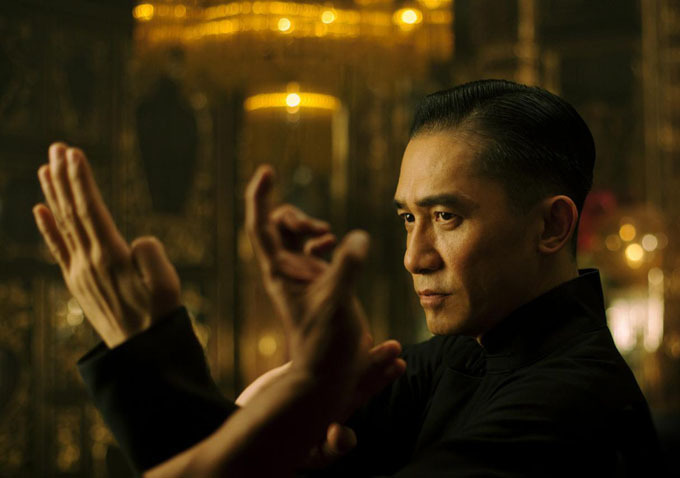
9. The Grandmaster (2013)
The Grandmaster (2013) 3
Wong Kar-wai’s latest film deviates from all of his previous work in a significant way. The Grandmaster tells the true story of Ip Man’s life and the rise of Wing Chun as a martial art. The film is thusly part biopic, part period piece, and part genre film. In form, it is quite different from anything the director has done before. However, in content and theme, Wong Kar-wai is present at his most compelling; he effectively concentrates his twenty years’ practice on the story of a man whose real-life struggles exemplify the themes that the director has dealt with all along.
Played by none other than Tony Leung, the Wing Chun grandmaster, Ip Man, proves to be the essential Wong Kar-wai protagonist. The move away from a contemporary Hong Kong setting is a move to expand the director’s cinema, as the story not only embodies his deepest thematic concerns, but goes back in time to critical events in mainland China’s history. The film is then comprised of yet another part: part invigoration of the Chinese national cinema. With The Grandmaster, Wong Kar-wai expands his oeuvre in both width and depth.
The film presents a refreshingly refined narrative; frame loosely around the Second Sino-Japanese War, it chronicles the events of Ip Man’s rise to grandmaster of the South, life, and legacy. However, the film devotes a significant amount of its narrative to following the longtime relationship between Ip Man and the daughter of the retiring Northern grandmaster.
Rather than explore his themes of fulfillment, connection, etc. in the foreground, Wong instead recognizes these elements in an individual whose stable life is shaken by real events. Thus, the film is effectively about before and after, a meditation presented throughout Wong’s work, often in the forms of regret and longing. The historical narrative, however, keeps the film moving. Wong doesn’t take the poetic license to linger but rather posits these moments between before and after for contemplation as they occur.
Grandmaster 2
The Grandmaster deals with binaries on several levels. The first scene, a remarkable fight sequence in the pouring rain, serves as a kind of mission statement for the film. Ip Man himself provides the first binary to an unseen party: “Horizontal. Vertical.” In his thinking, this is the essence of Kung Fu, fall down or stay standing. And the ensuing street fight reinforces this conceit: Ip Man defeats a crowd of challengers without receiving so much as a single blow.
He fights with the kind of precision that looks effortless, despite the flurries of crushing blows and bodies flying through the air. It isn’t until a lone rival enters that the sheer physicality of the combat is understood. In fact, the effect presents yet another binary, the physical and metaphysical. Kung Fu is effectively a form of transcendence; despite its brutality, it appears as more art than combat.
This meditation on binaries and their transcendence into a more complex uniformity is realized at a critical moment. Ip Man’s“fight” with Gong Yutian, grandmaster of the North, is an exchange of ideas rather than a physical encounter, the ultimate marriage of two opposites in Kung Fu. From here, though, the film goes in a more familiar direction. With the retirement and defeat of her father, Gong Er becomes Ip Man’s lifelong adversary and friendly antagonist. Wong charts the relationship between these two characters – united opposites of North and South – through their letter correspondence and Ip Man’s concern for the vengeance that drives Gong.
The film centralizes on the juxtaposition of the characters’ lives after the war. While Ip overcomes his traumas and goes on to establish his school, Gong strays from her martial arts. At the heart of this juxtaposition is the camaraderie that binds the two together. Although it’s never so much as alluded to, the relationship between Ip and Gong is palpably romantic. That she falls in love with him is tellable from the first time she challenges him.
The fight choreography is more intimate than any other instance in the film, and Wong photographs it with considerably more close ups than the others. The camera focuses on ways to keep the characters together rather than favoring, including a dazzling overhead shot that sees the two more as dancers than combatants.
The Grandmaster (2013)
There is repression here as there is at the core of all Wong’s work. When Gong invites Ip to the North for a rematch there is already an implication that her invitation is more than literal. And of course there is more that separates the two than North and South. Instead of probing the moral consequences of longing – as in In the Mood for Love – Wong examines two individuals who are resigned to their separate paths, with martial arts as both a crucial and ostensible backdrop.
The director thusly strikes a similar thematic chord in a far more subtle way with this historical-genre film. The deftness and craftsmanship of The Grandmaster as a commercial production – this while preserving the intangible qualities that audiences view Wong Kar-wai for – is perhaps the most significant development in the auteur’s career to date.
In far greater respects than a departure from form, The Grandmaster is a bold statement in Wong’s career. His collaboration with China’s mainland film industry speaks to much more than a transition from art house to commercial interests. If Wong Kar-wai had guaranteed his legacy as one of the greatest Romantics of cinema prior to The Grandmaster, then perhaps it is already time for a greater appraisal of the director’s work.
Author Bio: Kevin Pementel is a Chicago-based filmmaker and film writer.

Read more at http://www.tasteofcinema.com/2014/filmmaker-retrospective-the-poetic-cinema-of-wong-kar-wai/#mLlRkT5WuvyMv43D.99

Monday, August 11, 2014

The 25 Greatest Films You May Never Get To See | Taste of Cinema - Criterion Film Reviews and Classic Film Lists

[平行時空137] 赤柬殺人集團—左翼知識分子的反思


赤柬前高層喬森潘與農謝因政權屠殺二百萬人的暴行,被判終身監禁,令世人再次勾起對那恐怖政權的回憶。赤柬領導層幾乎一律受過高等教育的留法高材生,有教授、博士銜頭的大不乏人,教育水平遠超立國時代的蘇共、中共、越共。正是這批人,高度仇視知識分子,執政後差不多把全國精英殺光。

法國殖民管治印度支那時,有政策提供獎學金給尖子深造,喬森潘便是拿獎學金就讀巴黎大學與蒙彼利埃大學,獲政治經濟學博士學位,論文以依附理論(Dependency Theory)講述柬埔寨經濟和工業發展,回國後成為金邊大學法學教授,並創辦法語左翼刊物《觀察家報》。喬森潘溫文爾雅,有「柬埔寨周恩來」之稱,訪問過他的青年都被其風範折服。

巴黎大學經濟學博士胡榮也是赤柬高層,論文研究柬埔寨農民與現代化,主張國家發展無須經過城市化、工業化階段,赤柬建政後用了他的理論,他卻被清洗了。另一名被清洗的高層符寧也在巴黎讀法律,其學識曾得國王西哈努克賞識。赤柬秘密警察之父、國防部長宋先則在巴黎讀教育,回國後成為金邊大學教育學院院長,培訓「老師」;其妻雲雅特則為教育部長,昔日同為教育學院老師。

思想走偏鋒忽視人性

審訊的唯一女被告英蒂迪,在法國名校索邦大學修讀英國文學,研究莎士比亞,是柬埔寨這法語系國家的首位英國文學學位持有人,回國後任教授,創立英語學校,堪稱一代才女,年前以老人癡呆逃過審訊。其丈夫兼去年過世的英薩利是赤柬外長,留法時與英蒂迪結婚,以私人交情邀請大批留法精英回國,卻把他們送到集中營。

其中一名被請回國的是現任副總理兼外長何南豐,他是巴黎大學法學碩士,並在國際關係名校IEEI外交系畢業。官方指他被關進集中營,但根據《維基解密》,他是獄長才得以保命,而為其否認。

英蒂迪的姐姐喬波那利亦留法,讀高棉文學,回國後當老師,在法國國慶日和另一留法知識分子結婚,那就是後來的赤柬領袖波爾布特。上述四人合稱「赤柬四人幫」。波爾布特成績不佳,但回國後足以教授法國文學和歷史,被他軟禁折磨的西哈努克承認,其法式優雅令人難忘。

不厭其詳介紹這些人,無非說明他們並非普通知識分子,而是代表整個國家整代人的最優秀精英,被全國寄予厚望。他們有使命感,深感要創一番大事業才不負所學。他們甚至有國際聲望,一些左翼學者在赤柬暴行被揭發後,還為其唱讚歌,最著名的是美國左翼大師喬姆斯基(Noam Chomsky)。

問題是,這些學術精英雖研究群眾,搞經濟理論,愛政治哲學,赤柬政權叫「民主」柬埔寨,但其實十分「離地」,並非從基層打滾出來,靠的是精英身份,才獲首批支持者。他們不相信本身的理論能為廣大人民認識,亦不認為廣大人民需要明白艱深理論,以為簡單口號加上極權高壓,就足以帶領群眾,到頭來變成徹頭徹尾的超現實,但極權機器已建立,誰也逃不了。

在理論層面,他們的博士論文通過一流大學答辯,自然比一般人思想深奧,但走出課堂才是真正的考試,真正的tutorial。普羅民眾並不重視共產還是資本主義、民主還是君主制,只在乎有否好生活。對此他們不是不明白,只是不認同。當群眾跟不上他們的理念,他們要麼走偏鋒喚醒世人,要麼投身敵我分明的現實政治,到頭來卻忽視理論之外的人性,悲劇便出現。

赤柬的教訓,值得把理念放在口邊的知識分子反思,這自然不是說理想不重要,只是擇善固執與走火入魔,帶領群眾與強加於人,只是一線之差,差之毫釐,卻謬之千里。

沈旭暉 信報財經新聞 2014年8月11日